My love affair with tweed began at an early age when my mother wore a fabulous ginger coloured wool trouser suit from the 1960s”
I’ve always loved British fabrics, and tweed in particular. I think it’s the soft muted colours, usually reflecting the natural environment that appeals most. It’s also the intricate weaves and the quality of the yarns, plus the amazing history of the fabric that intrigues me.
My love affair with tweed began at an early age when my mother wore a fabulous ginger coloured wool trouser suit from the 1960s, which incidentally I still have. She didn’t have lots of money to spend on clothing, so bought classic pieces to last – an ethos that is wholly relevant in the current economic climate. I always thought how classy she looked, and paid particular attention to the many coloured yarns that made up the overall look and shade of the fabric.
Then as a teenager, I was fascinated by Vivienne Westwood’s use of tweed to make unusual ‘high fashion’ garments, some with a ‘punky’ edge. It was the first time I’d seen it used on anything other than quintessentially British classics or country wear.
In my early 20s, I developed a love of Scotland and its breath-taking scenery, with shades from heather and moss to autumnal rust and gold, in all their glory. This only fuelled my romantic notion of tweed. Each trip I made northwards, the friend I was holidaying with was tasked with driving me to every woollen mill within a 300 mile radius, however remote or difficult they were to reach.
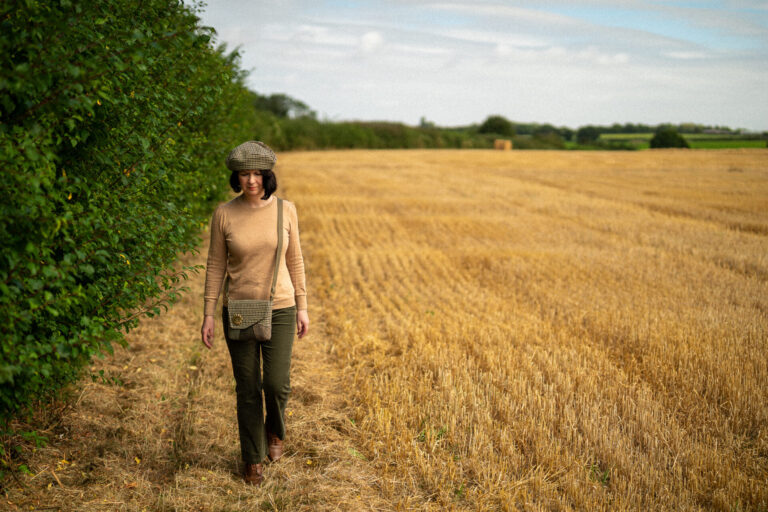
Fast forward a few years and I was in seventh heaven buying rolls of tweeds and woollen fabrics to create my vintage inspired clothing. I fashioned everything from Sherlock Holmes style caped coats to romantic 1920s inspired jackets and dramatic long cloaks. I bought the fabric direct from the mills I had sought out on my travels. I still have a few pieces left over from those days, which I sell in my Etsy shop. Those I can’t bear to part with get made up into Charlie’s Aunt bag or hat samples.
More about tweed
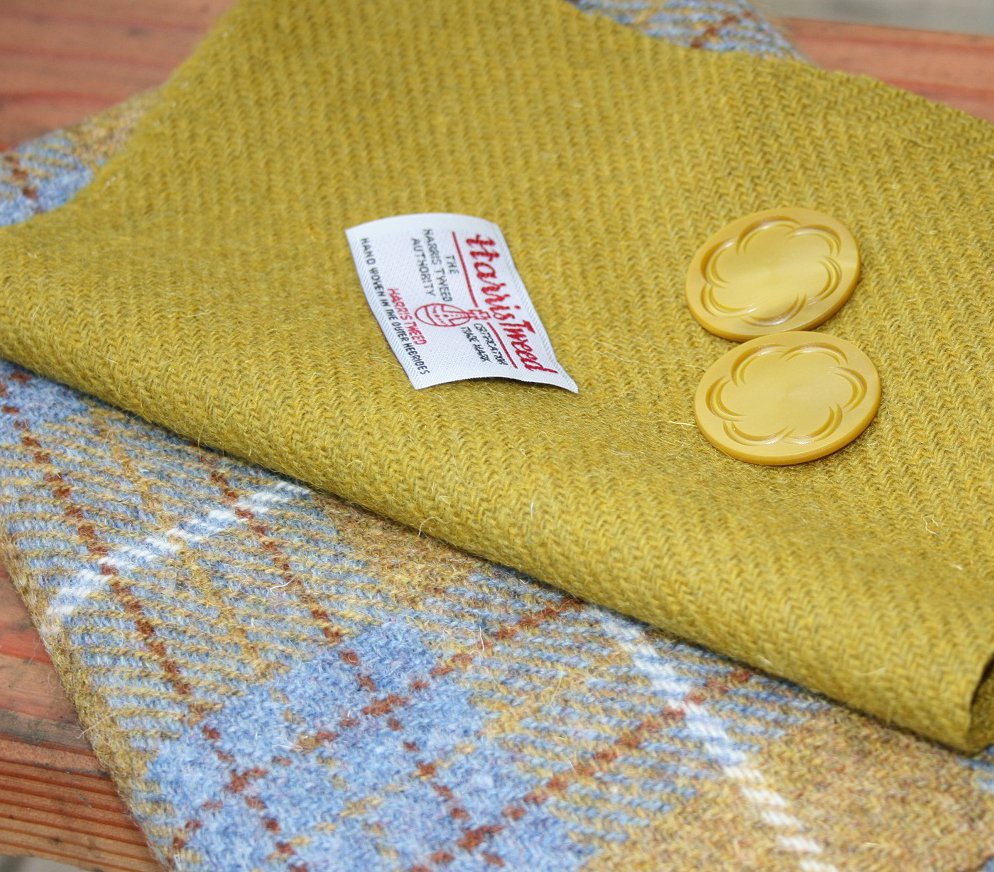
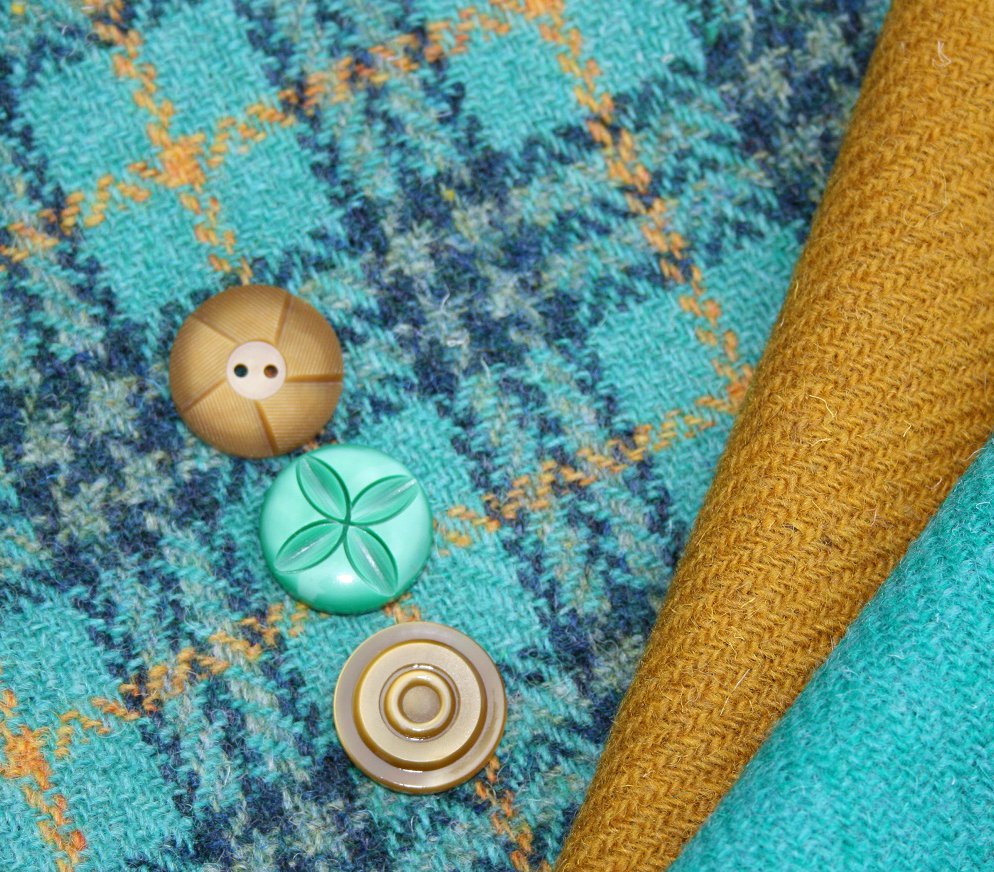
Although I’ve always used tweed in my designs, the cloth – and particularly the handmade Harris Tweed – has seen a huge revival in the fashion industry in recent years. Tweed, which dates back to the 18th century, is thought to be the invention of Scottish farmers who needed a hardwearing woven cloth that was moisture resistant and warm, to withstand the harsh Scottish weather. The tastefully patterned fabric was made using wool from local flocks of sheep which was then spun into yarn and dyed (very often using plant-based dyes which originally would have been made from locally picked plants, giving them a ‘muted’ appearance).


Corduroy and moleskin
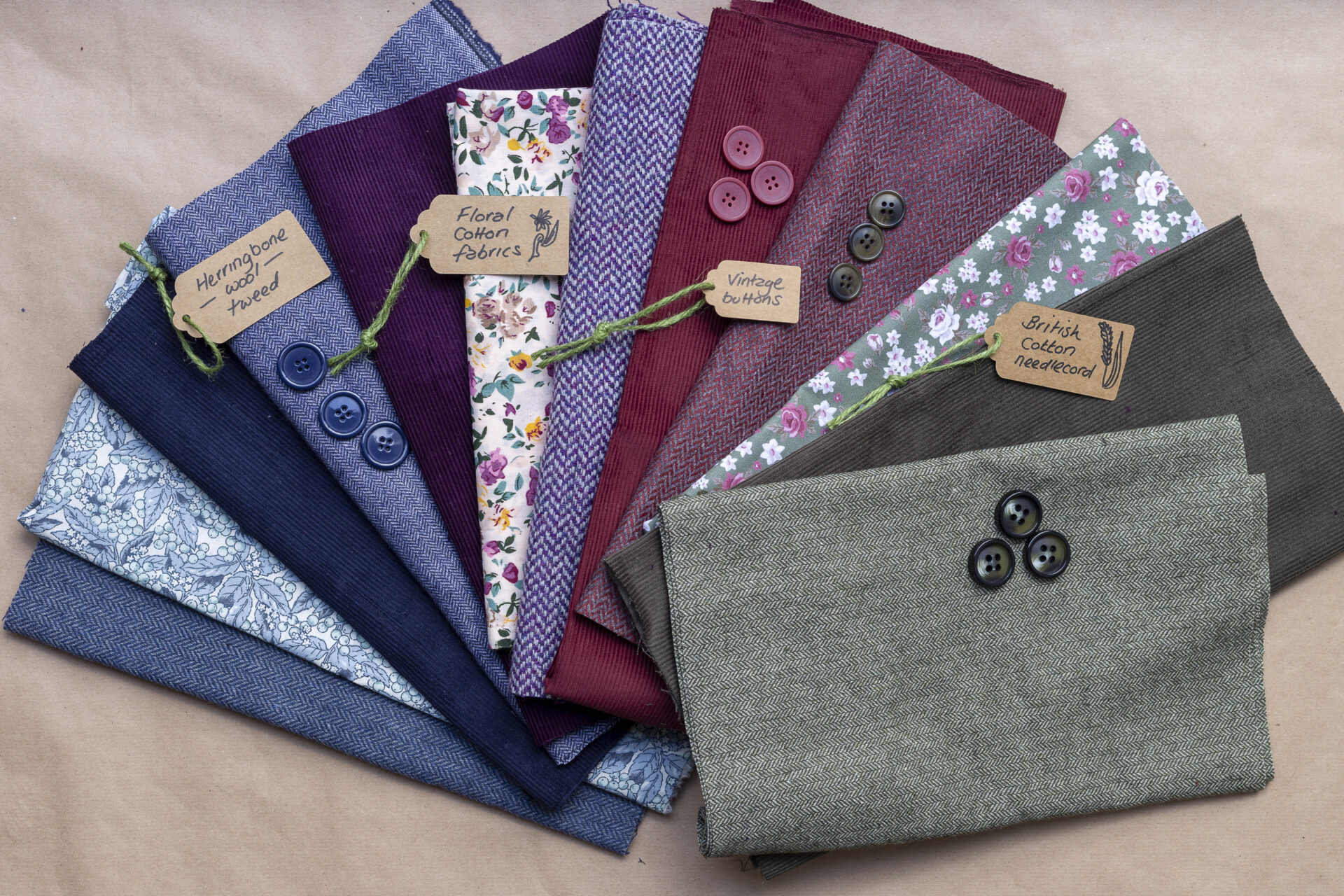
I’m very partial to corduroy and moleskin as they are also both traditional British fabrics. They are similar in that they are both woven with a high ratio of weft to warp threads. This creates a thick and strong cloth but with a smooth appearance. The corduroy and moleskin that I stock in the Etsy shop is 100% cotton and comes from a company in the north of England that has been weaving and converting corduroy and moleskin fabric since the middle of the 19th century.


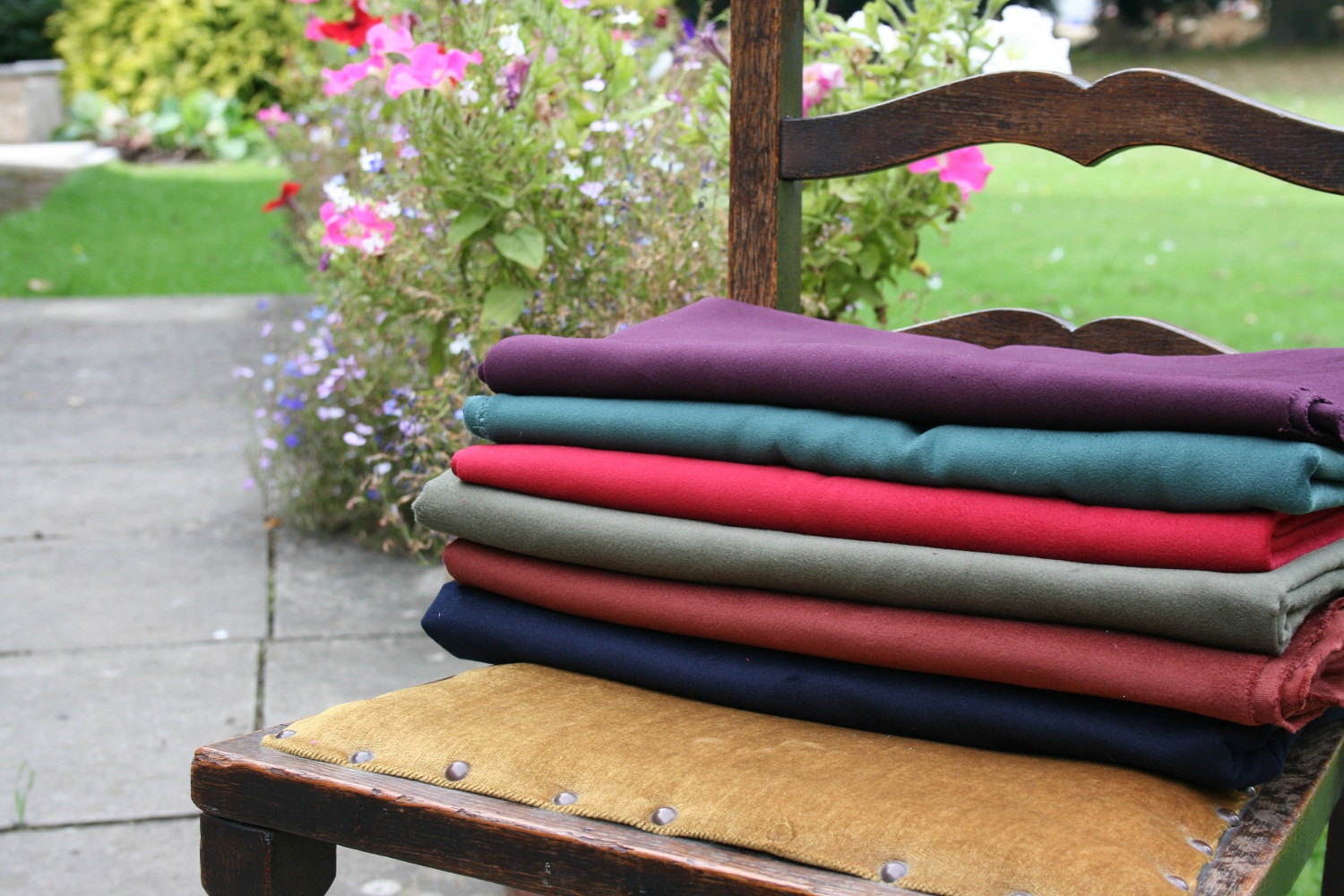
The medium weight moleskin is top quality (the printed pieces are limited edition) and destined for the high-end country clothing market. Moleskin (containing absolutely NO moles!) is heavy cotton fabric that has been woven and then sheared to create a short soft pile on one side. It has a feel of wool velour, and a velvety soft finish on the right side. In most cases the surface of the face of the cloth is brushed or ‘sueded’ to give a soft supple appearance and handle. Charlie’s Aunt loves moleskin as an alternative to wool because it has the same traditional English country look and feel.
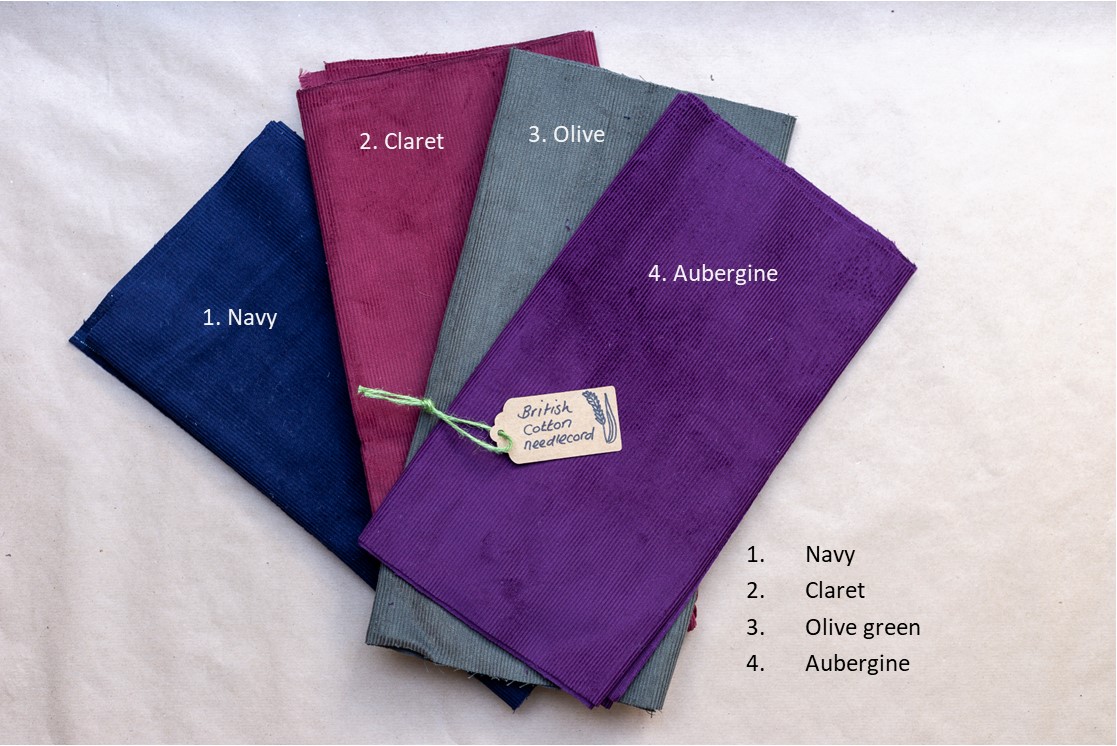
Our corduroy fabrics come from the same source. Cord differs from moleskin in that the smooth face of the fabric is punctuated with equally spaced ribs, known as ‘wales’ that run the length of the piece. The wales are cut on specialised machines to form ribs of raised pile. You will often see corduroy described by the number of wales – the higher the number, the finer and more tightly packed are the ridges. So needlecord has a lot more small, tightly packed wales than a ‘jumbo’ corduroy. The variety that I stock is 11 wale.
Retro floral print cottons
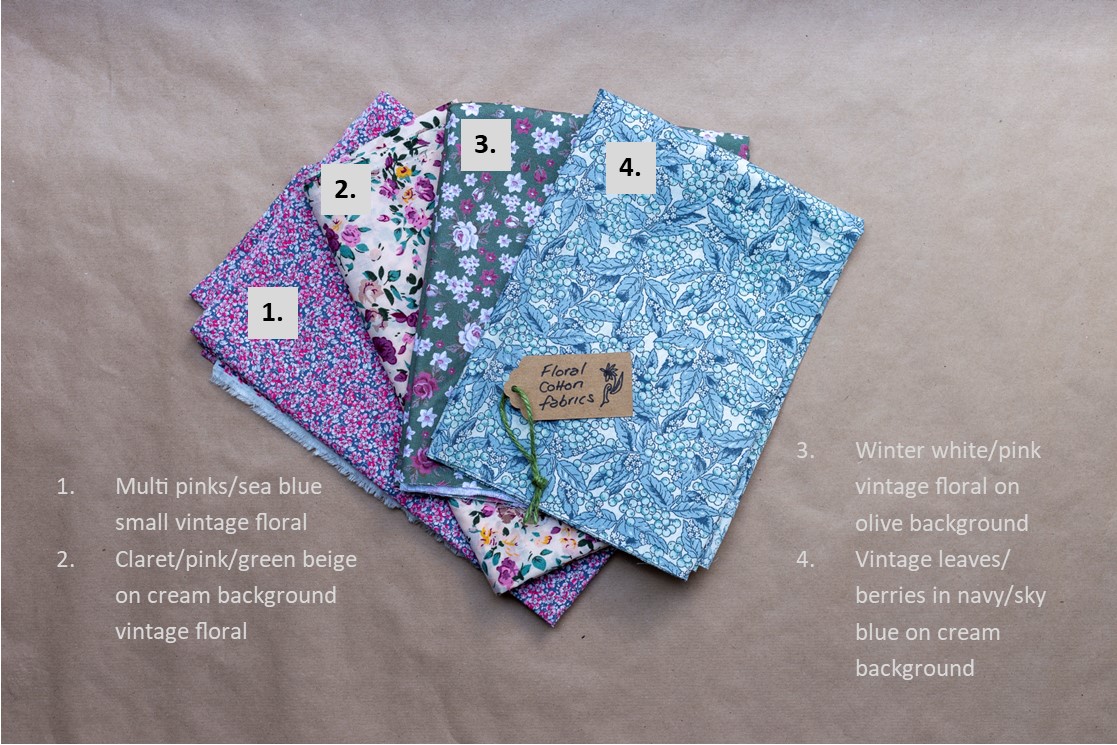
I’ve always like to finish off my bags and hats with a pretty lining so I search out retro floral print fabrics to complement my tweeds, cords and moleskin. I try to find a few new ones each year to enable my customers to add that special surprise inside their creations. A floral lining works very well with a plain fabric such as corduroy, moleskin or woollens.
Mixed fabric packs
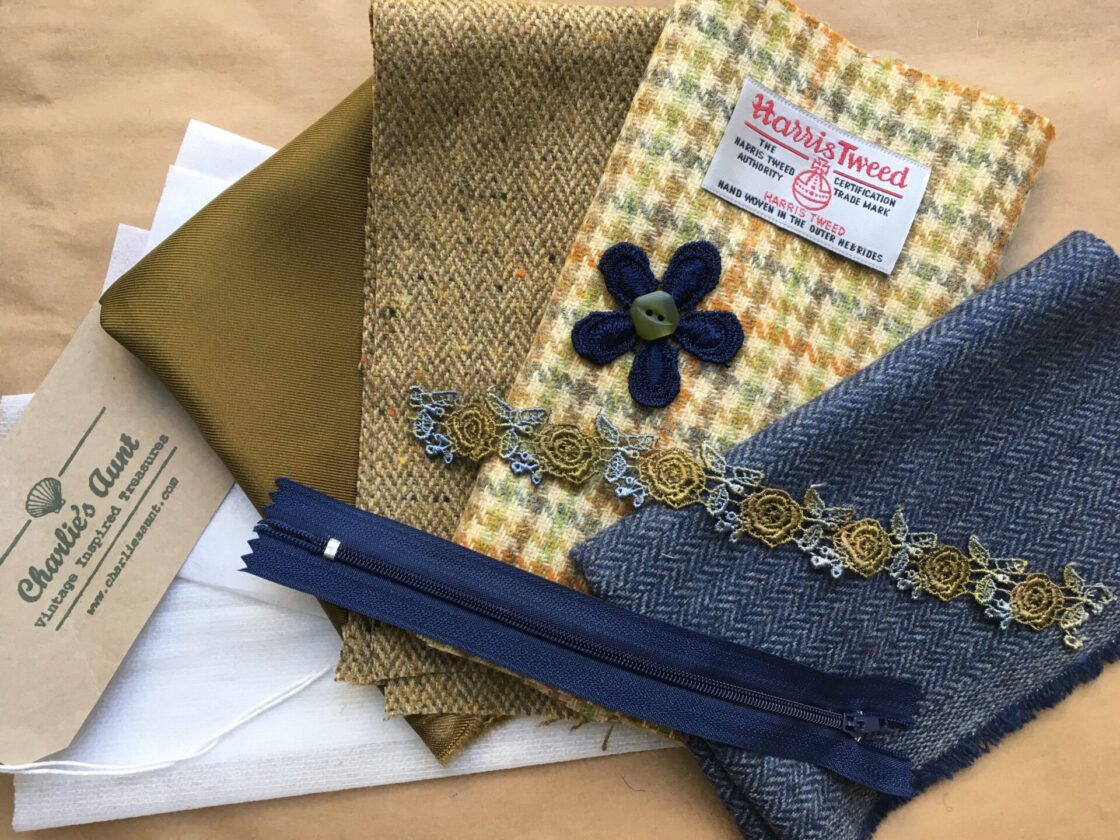
As with all sewing projects, I have ended up with some small pieces of fabric that I have, thankfully, kept over the years. With the resurgence in ‘make-do-and-mend’ projects, I’ve just gone through the time-consuming process of sifting through these bags of total gems and putting some together in colour co-ordinated packs. The packs come with a PDF small purse pattern and there will be enough fabric to make one purse using the pattern. I will explain more about the thinking behind the purse pattern in my next blog.
Anyway, the fabric packs include pieces of Handwoven Harris Tweed, British wool tweeds, Sudbury silk and vintage woollens along with tiny scraps of beautiful hand-painted lace, vintage buttons, ribbons and applique. These are all true ‘one-off’ packs so head to the fabric section of the Charlie’s Aunt Etsy shop to see what I have in stock at any given time. More to come before Christmas!