How to stitch every precious scrap of fabric into a vintage inspired fashion accessory”
Fans of Charlie’s Aunt will know that my patterns are unashamedly vintage in their styling, influenced mainly by the fashions of the decades between the 1920s and 1960s. By far the strongest and most enduring inspiration comes from the late 1930s and early 1940s, mainly due to the impact of the Second World War on fashion during that period.
Make-do-and-mend
As part of its ‘Make Do and Mend’ drive, the Government of the day issued a pamphlet by the British Ministry of Information, aiming to provide women with useful tips on how to be both frugal and stylish in times of harsh rationing, and to make the best of what they already had.
When clothing was rationed, making accessories offered the best way to update fashions from one season to the next and in many cases defined the look of the decade.
Accessories were easy to fashion from small left-over scraps of fabric or old pre-loved pieces of clothing so styles ranged from classic to imaginative, blending colourful fabrics with whimsical shapes, created from a wide selection of materials influenced by the social and economic climate of the times.
Now, we are once again faced with a compelling call to make-do-and-mend our clothing and embrace slow, sustainable fashion, but for a very different reason – to minimise the impact of what we produce and consume on our planet and its inhabitants.
There can be no ‘slower’ fashion than making your own. Whether you craft a serviceable tweed messenger bag for your own use or a pretty bow-trimmed clutch bag as a special gift, handmade fashions have heart and soul, will last for years, be incredibly serviceable and will give the owner individual style. Handmade is the antithesis of mass-produced ‘instant gratification’ fashion and what’s more, you can choose to make your fashions in sustainable materials.

What you can make with leftover scraps of fabric, ribbon and odd buttons
As most of my customers will know, my favourite fabric is wool tweed (more on this in a later blog) and I use lots of vintage ‘deadstock’ fabrics left over from my clothing design business in the 1990s. I also use pieces of designer end of roll or offcuts, all of which would normally go to landfill. Most of my patterns use less than a yard of fabric and when I have cut out my bags or hats, I keep every precious scrap for smaller projects.
My tip is to keep the scraps colour-coordinated in bags or jars with matching odd buttons, ribbon scraps and threads to inspire mood boards. Below are some ideas for using up those little woven gems.
- Applique on purses or bags such as our Pooch Purse PDF pattern. Backed with fusible web, you can cut out and keep an array of shapes that can be applied to bags, purses or even cushions.
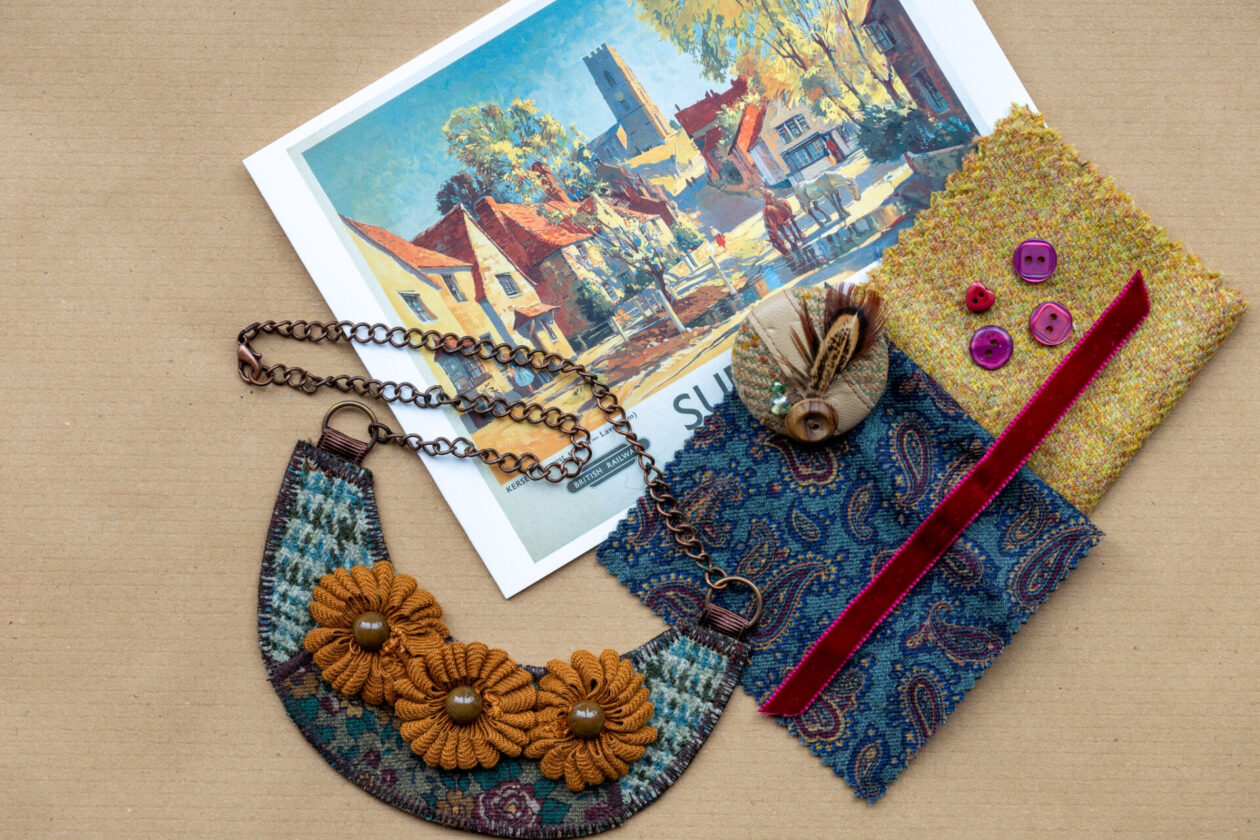
- Textile necklaces such as the Autumn Windfall Bib Necklace PDF Pattern can be made from very small pieces of fabric and work best teamed up with toning ribbon scraps or beads
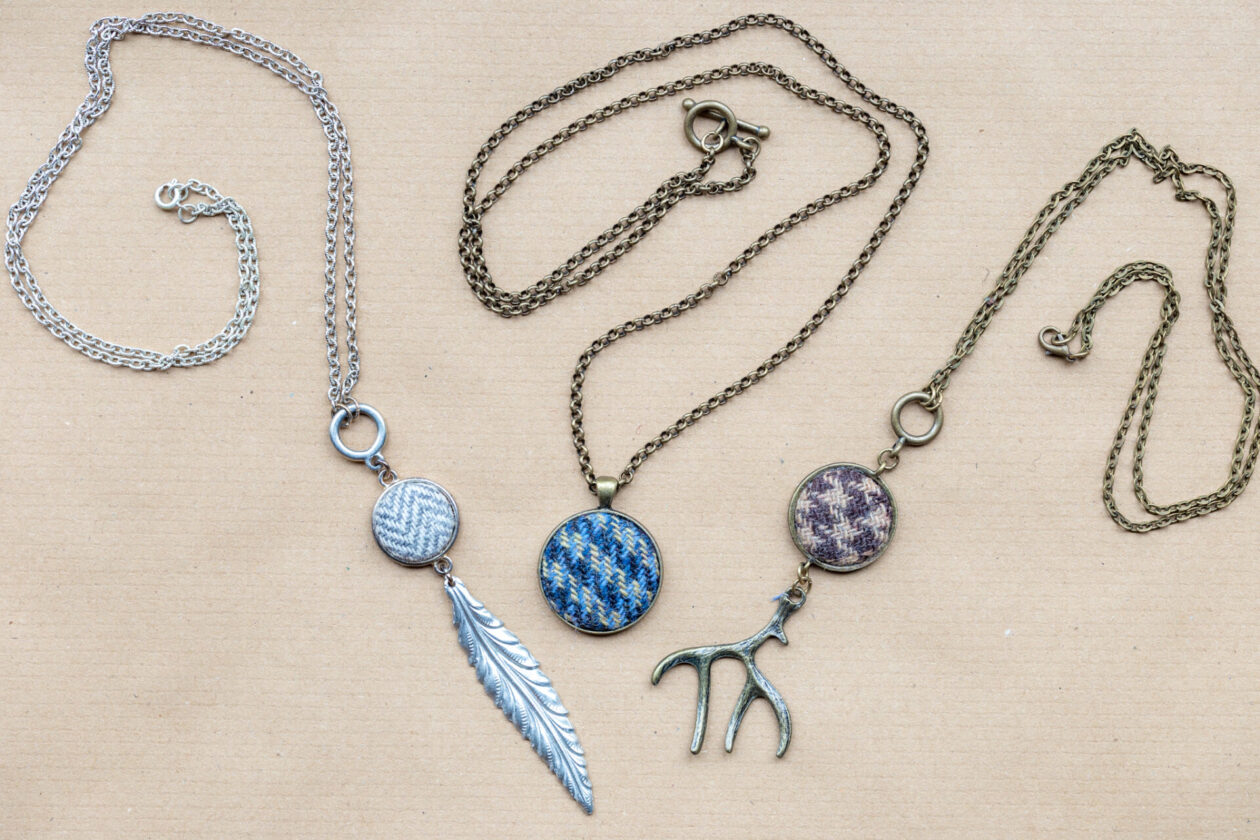
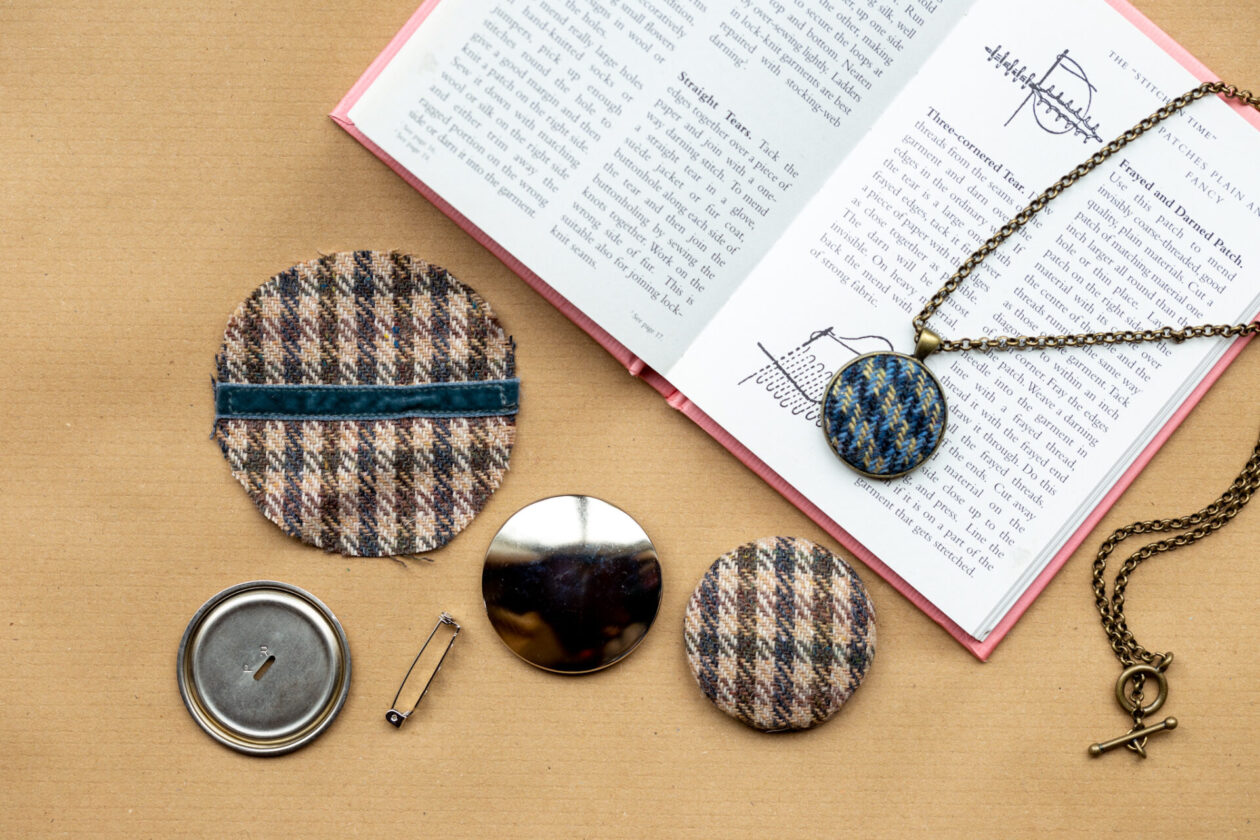
- Cover buttons with small scraps to create either pendant necklaces, earrings or rings. Trimmed with painted lace, tiny pieces of velvet ribbon, buttons and beads, they make great brooches.
- Keep a box of fabric ‘squares’ backed with fusible web ready to patch up worn items such as elbows or knees
- Make fancy pockets to trim up plain tops or skirts
- Keep small squares of felt or tweed to create fabric flowers or leaves that can be used as trims for bags or hats, or as colourful corsages to be worn on lapels