

A look at how the humble zigzag trim can be used for a lot more than fancy hems”
Why buy when you can make?
My passion for fashion began at an early age. I came from a family where most things were homemade. From the Friday night baking of bread and cakes which filled the house with wonderful aromas, to the cupboards full of jewel-coloured jams made from home grown fruits. And then there was the homemade wine, packed full of the widest array of flavours from hedgerow fruits to orange and ginger. So I guess it was natural for me to want to be make and be busy.
Both of my parents were creative – my mother with cooking, baking and flower arranging mainly. My father literally made everything he could. We even lived in a house that he built himself and he made most of what went in it. He also created everything from dolls’ houses for us (and many of neighbourhood children), to chalkboards and easels, go-carts and even a slide fashioned from ‘lino’ and chipboard. An old cine film from the 1970s exists somewhere of me going down said slide backwards and falling off the end! We were encouraged to be productive, rather than passive and we ended up inheriting the ‘making’ gene in spades.
In terms of clothing, I usually ended up getting the hand-me-downs fourth-hand after my sister and two cousins had virtually worn them out. Many of the items I had ‘new’ were handmade.
I mention this because one of the earliest of these I can remember was a purple maxi skirt – both my sister and I had them – and they were trimmed with ric rac braid at the hem.
History of ric rac
This most humble of sewing trims, ric rac (sometimes spelt rickrack) became popular in the 19th century and was widely used throughout the 20th century, never more so than in the 1970s. Ric rac has seen many uses as a flat applied trim or seam insertion, livening up everything from aprons and home accessories to fashion garments. It has enjoyed a revival in recent years with different widths from skinny to jumbo again being sold in haberdashery shops, in a rainbow of colours.
Fast forward to the 21st century and you can still buy ric rac in a range of wonderful colours, widths and textures. I’ve got several rolls of the stuff and so I set about looking for some new uses for it.
I had often wondered what else could be done with theses charming vintage style trims until I purchased an original 1960s pattern that showed how to make rickrack flowers. They were used as flat appliqué in the pattern, stitched flat to a hat. I have simply developed the idea and come up with some great ways to use these vintage blooms both as trims and as accessories in their own right.
For example, in my book Making Vintage Accessories, I’ve used rickrack to make three-dimensional trims for hats and bags and even jewellery.
How to make a ric rac rose
One of the coolest things is to turn it into ‘roses’. These are ideal as they can be made in ric rac of varying widths.
To make a basic rose you will need:
- Approx. 24 inches (61cm) of jumbo ricrac
Making up instructions:
Step 1
Fold the length of ric rac in half and twist it around itself as shown in the picture below until you reach the end. Neaten the ends by tucking them under and stitching them together so that the raw edges are not invisible.

Step 2
Starting from the end you have just neatened, roll the twisted length on itself, securing with a few hand-stitches as you go to form a rose (see image below). Hand-stitch the end in place.

Step 3
Turn down the petals to form a rose shape (see image below).
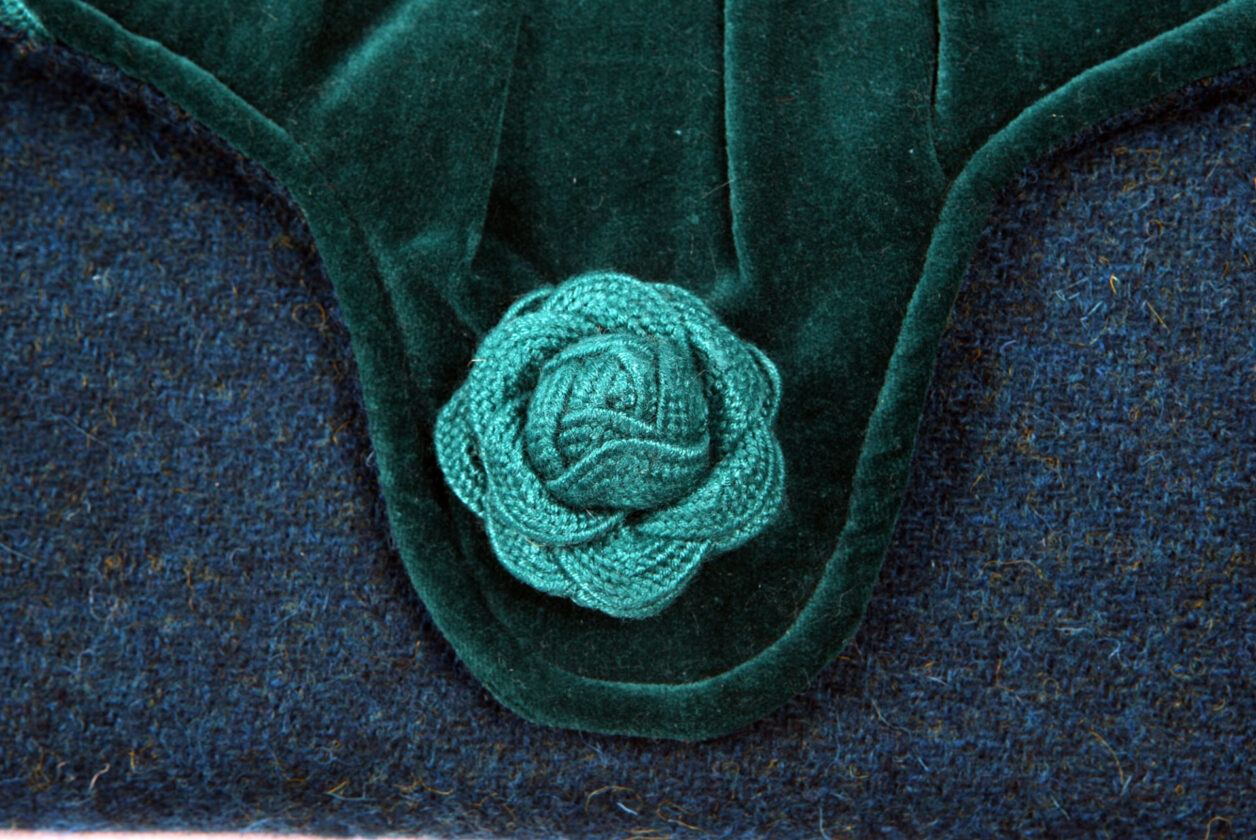
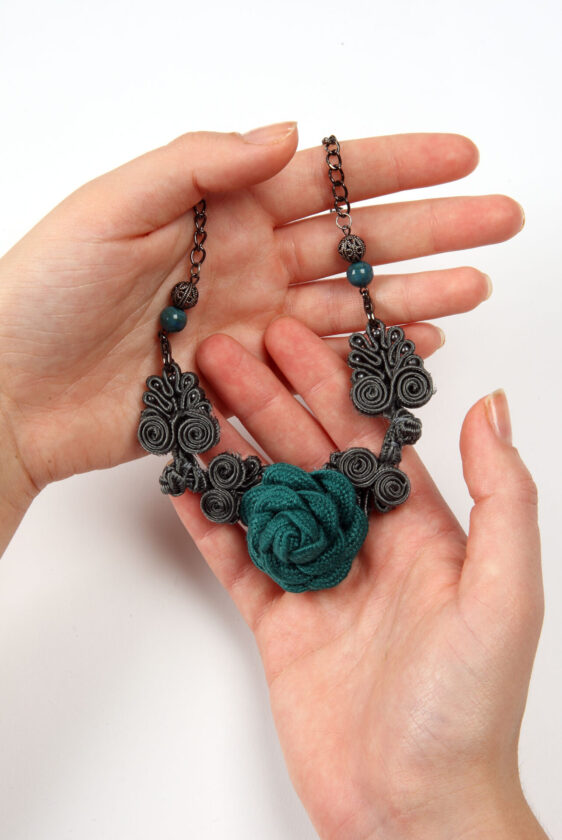
This rose can be used to trim the flap of a bag or to make the centrepiece of a necklace (see image below). Or if you make it from narrower ric rac, it can be used to make a great ring.
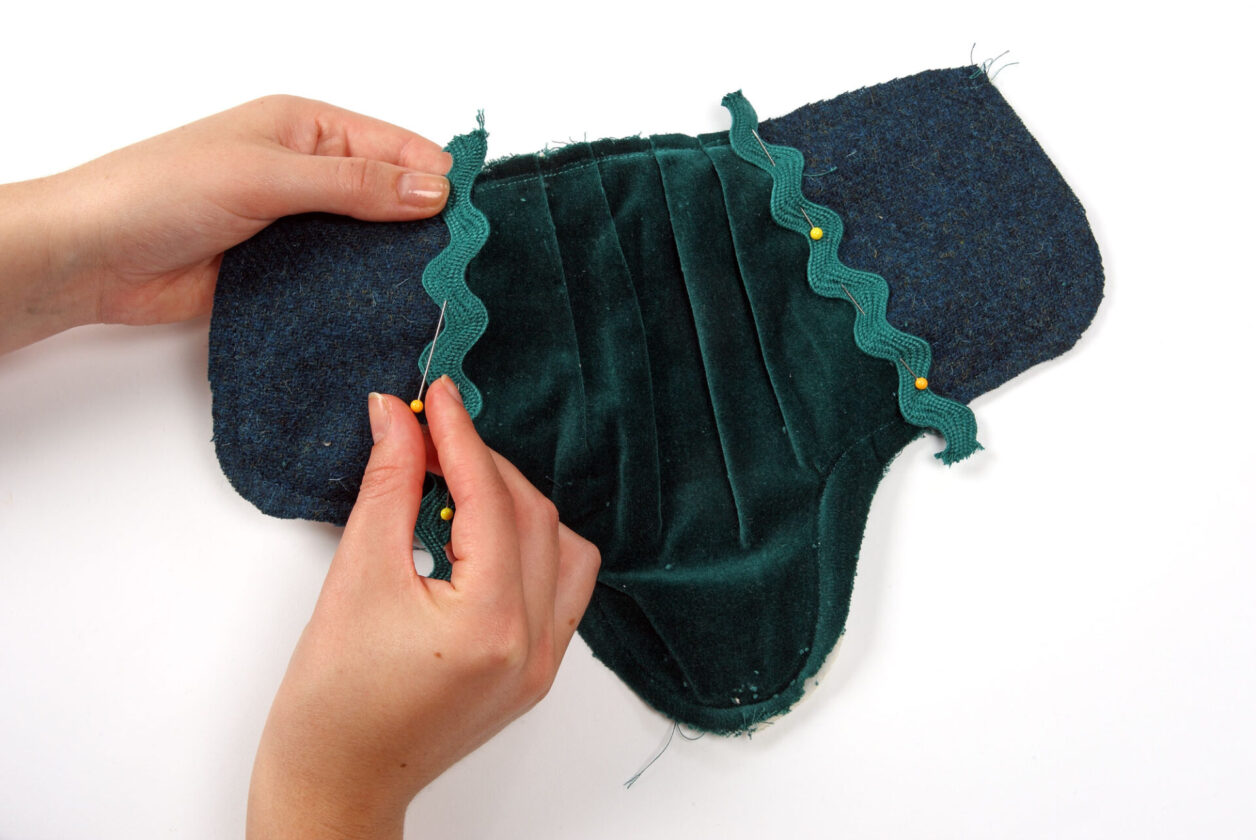
Other uses for ric rac Other things I use ric rac for include trimming on handbags, clutch bags and hats (see image below).
In my pattern for the Autumn Windfall Bib Necklaces, I use ric rac for a different style of 3D flower trim. The pattern is available from the Charlie’s Aunt Etsy shop.


