Many traditions of Sudbury’s silk-weaving past have remained the same for centuries
I’ve been trawling through boxes of fabric recently and indulging in nostalgia as I remember where each piece was purchased, and what I had in mind to make with it at the time. One of the most treasured finds was a large box of Sudbury silk, much of it now ‘vintage’ and all of it unique. I’ve been listing odd pieces in the Charlie’s Aunt Etsy shop in the past couple of weeks, while sorting the silk into piles of fabrics I can sell, and the others I can’t bear to part with.
It got me thinking about when I first fell in love with this wonderful fabric and learned about the ‘textile’ heritage of the town where I went to school. My first encounter with Sudbury silk was as a sewing-mad teenager, challenging a well-heeled lady in a mill shop sale for a length of exquisite jacquard that seemingly had both our names on it. In my mind, I had already designed a vintage-inspired silk clutch bag, while my opponent was determined to secure the precious woven fabric for a couture jacket.
The silk sales and mill outlets were legendary in the immediate area. But it wasn’t until several years later that I realised the silk-weaving industry was such an integral part of my home town and a primary source of manufacturing and employment there since the early 19th century.
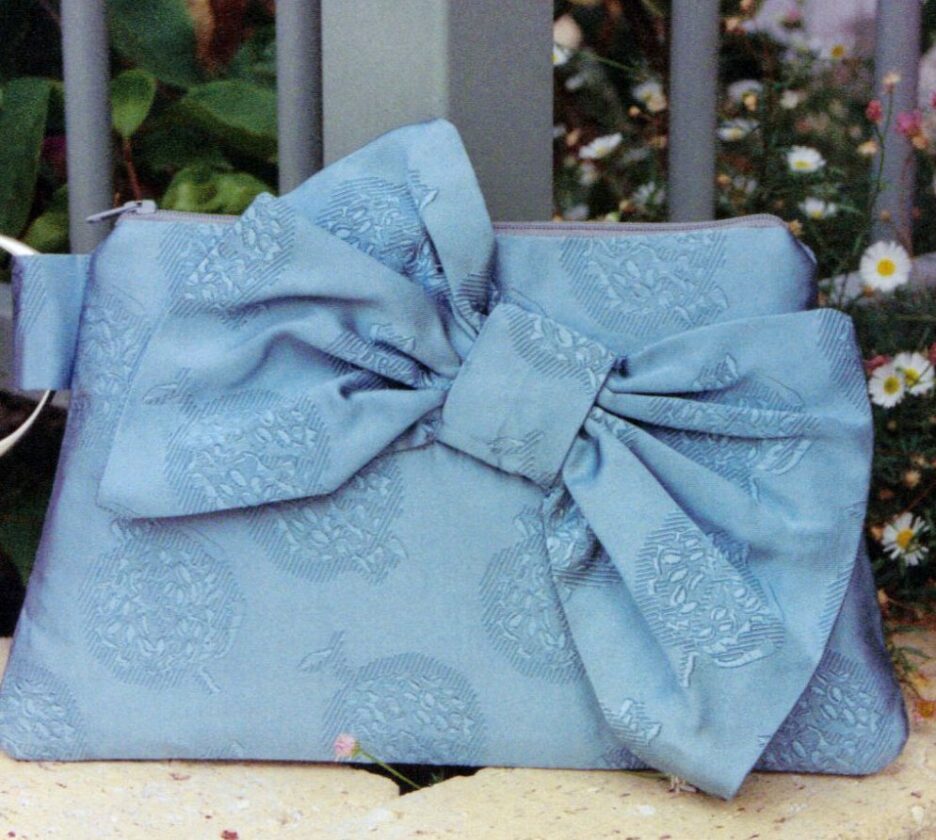
The bag on the cover of Making Vintage Bags was made using Sudbury silk
More than 25 years on from that first encounter, the bag made from my beautiful piece of Vanners silk featured in my first sewing book, Making Vintage Bags. Of course, the silk industry in the town is now world renowned with equally gorgeous lengths of Sudbury fabric gracing the backs and the homes of the rich and famous, ranging from our late Queen Elizabeth II to the former US first lady Michelle Obama.
Unfortunately, one of the town’s three silk-weaving businesses went into receivership in 2022 – particularly sad given its long and illustrious history, and because this was where I bought most of my fabrics over the years! There is a note on the company’s website which says it’s ‘relocating to Norfolk’, so there is hope. However, the other two Sudbury mills remain. The beginnings of the oldest of the two, Stephen Walters and Sons Ltd, can be traced back to 1720. Vanners silk weavers – the one which went into receivership, is believed to have originated in 1740. Both were firmly established in Sudbury by the early 1800s. Gainsborough Silk Weaving Company, with more than a century under its belt, dates back to 1903, and is the relative newcomer.
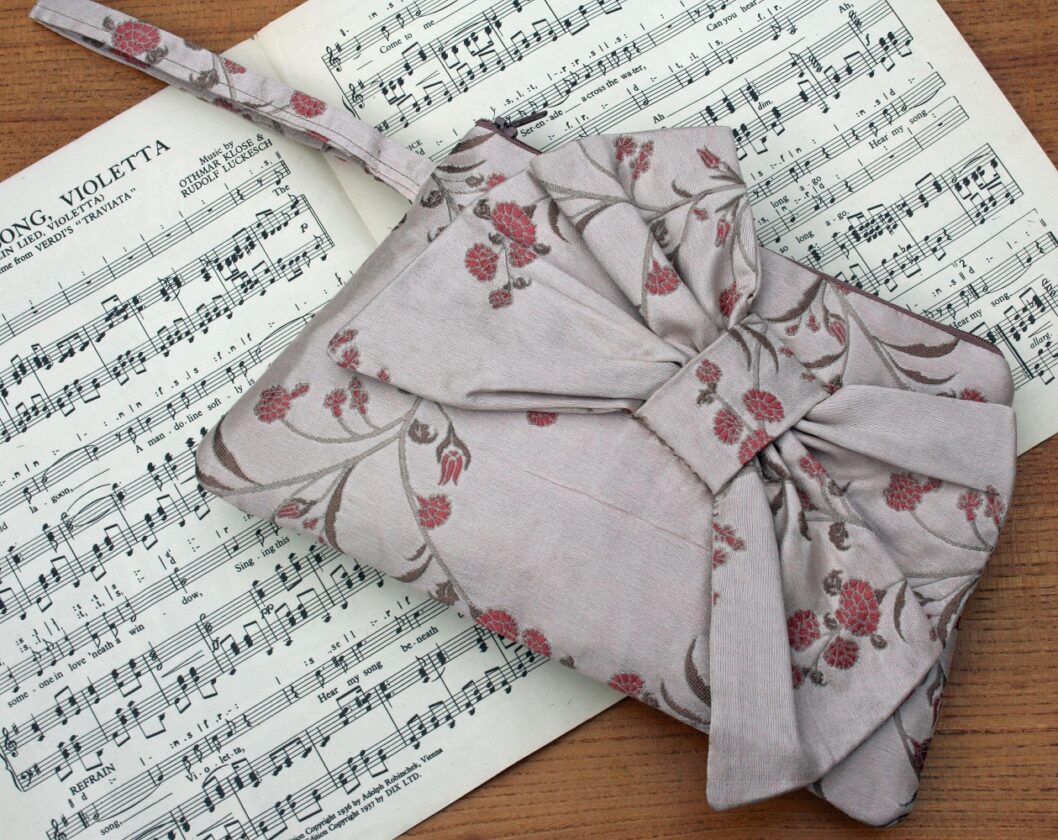
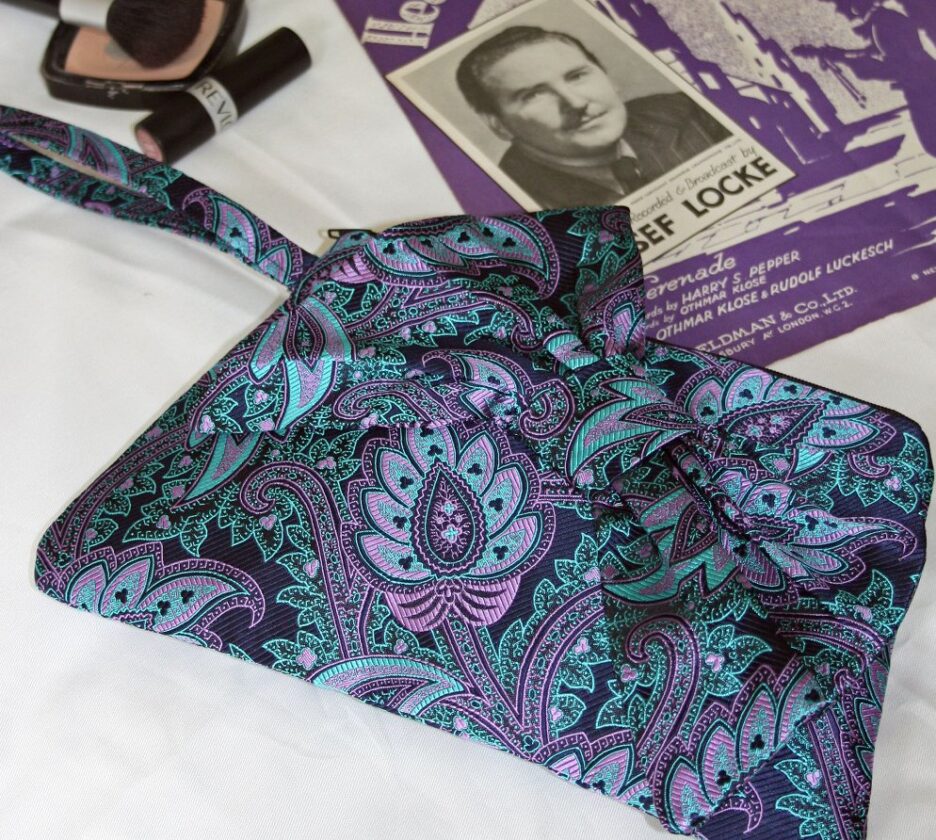
Bon-Bon Clutch Purse from Charlie’s Aunt made in Sudbury silk
How the town’s silk-weaving industry started
Sudbury became a centre for luxury textiles largely because of its close proximity to London, and the highly-skilled population of weavers already living in Suffolk. The nucleus of the UK silk industry in the 17th century was Spitalfields, London. It was established by French Hugenot refugees, who were mainly silk workers, weavers, throwsters and dyers from Normandy and Picardy. The Spitalfields Act of 1773, introduced to improve conditions for silk weavers, also fixed wage rates in London and abolished tariffs on imported silks. Because of this, several weaving companies looked to move their operations away from Spitalfields.
The Vanners brothers, who were descended from Hugenots, moved their silk yarn processing and weaving operation to Sudbury and Haverhill, where they discovered a wealth of skilled weavers hungry for work following the demise of the county’s wool trade. This combination of skill and experience turned Suffolk into a major hub of the UK silk industry by the turn of the 19th century.
Parts of the industry, such as umbrella and stocking production, suffered during the 20th century with the advent of synthetic fabrics. Because of this, where 100 years ago there were multiple centres for silk production across Europe and the USA, today there are only two outside the UK. These are in Lyon, France and Como in northern Italy. Apart from silk printing in Macclesfield, Sudbury is the only area left for silk production in Britain. The vast majority of Sudbury silk products are now exported.
What’s changed in silk weaving?
It would be fair to say that many traditions of Sudbury’s silk weaving past have remained the same for centuries. But, other aspects of the industry have had to move with the times. The addition of modern technology such as information systems, CAD design and electronics, have been applied to processes and machinery. The loom speeds run typically five times faster than 100 years ago, and at double the width, making them ten times more productive.
Before, the jacquard machines were controlled by punched cards, and it was a long laborious process to get from designs on paper to the punched cards. Digital computer technology changed all that, so designers are able to create new designs much more easily and faster. The tools to do the job are now that much more sophisticated.
I was lucky enough to tour both Stephen Walters and Vanners factories some years back. It was fascinating to watch the journey of the silk from an idea on a piece of paper transferred to a computer screen, through to the bobbins of threads being dyed in huge vats, dried in giant ‘microwave ovens’, before being woven and finally acquiring their complicated, characteristic patterns on a jacquard loom. It was easy to see why this is such a luxurious commodity.
The laborious process doesn’t end until every inch of the cloth has been finished and checked meticulously, before it can be released to high profile customers, which in the case of Vanners, included couturiers Chanel, Burberry and Prada, as well as several new cutting-edge designers.
Bon-Bon Clutch Purse from a pattern by Charlie’s Aunt made up in Sudbury silk
The other silk companies have also notched up an impressive who’s who of clients over the years. Stephen Walters and Sons Ltd, which still operates from the Cornard Road premises purchased in 1900, has been in the same family for at least nine generations and has produced everything from black mourning crepe during the reign of Queen Victoria, to parachute silk in the 1940s. It is widely known that they wove the silk for the Queen’s coronation robes and for Princess Diana’s wedding dress.
Gainsborough Silk weaving company has its roots in Sudbury, being founded in 1903 by Reginald Warner, when he was just 23 years old. His family counted such distinguished figures as William Morris and Walter Crane as friends. Warner started with more than 50 looms in weavers’ cottages all over Suffolk before moving to a purpose-built mill in Alexandra Road, Sudbury. The business was one of the first on what is now known as Chilton industrial estate. The business soon attracted a discerning clientele, and in 1912 received its first royal commission, weaving carpets for the famous Queen Mary dolls’ house.
Gainsborough fabrics have added a regal touch to the royal residences of Clarence House, Windsor Castle, Sandringham and Balmoral. They have also decorated a host of prominent buildings including 10 Downing Street, The Houses of Parliament and the National Gallery. The company has an archive of more than 2,000 original designs.
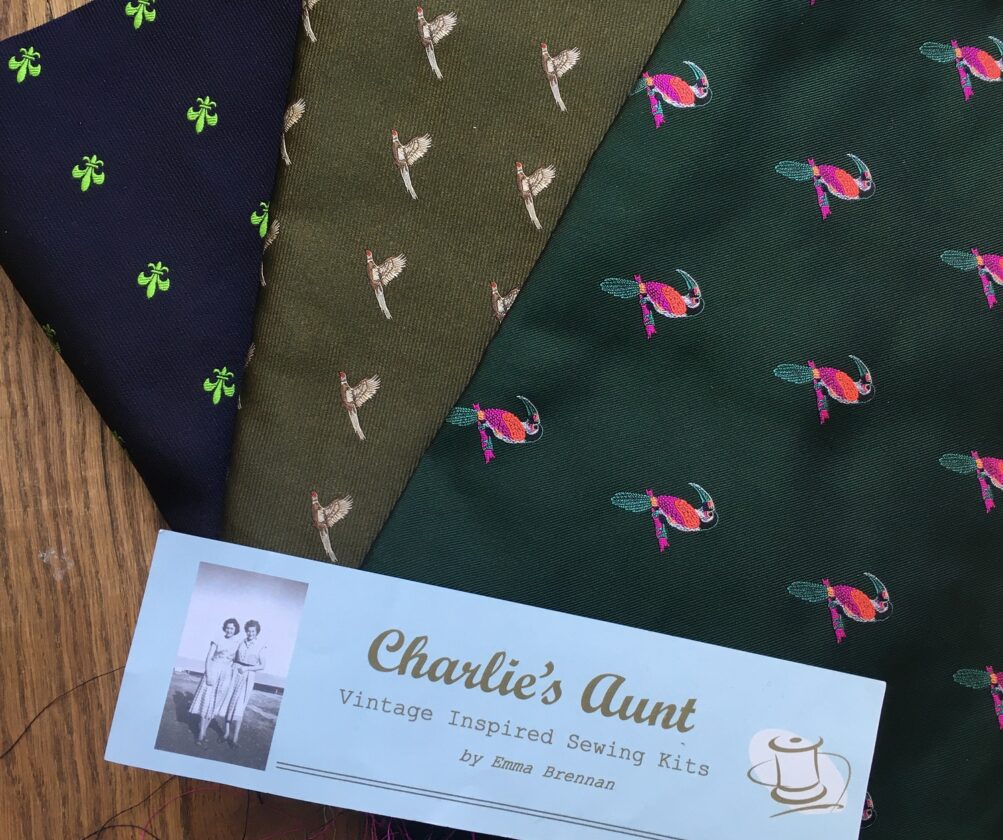
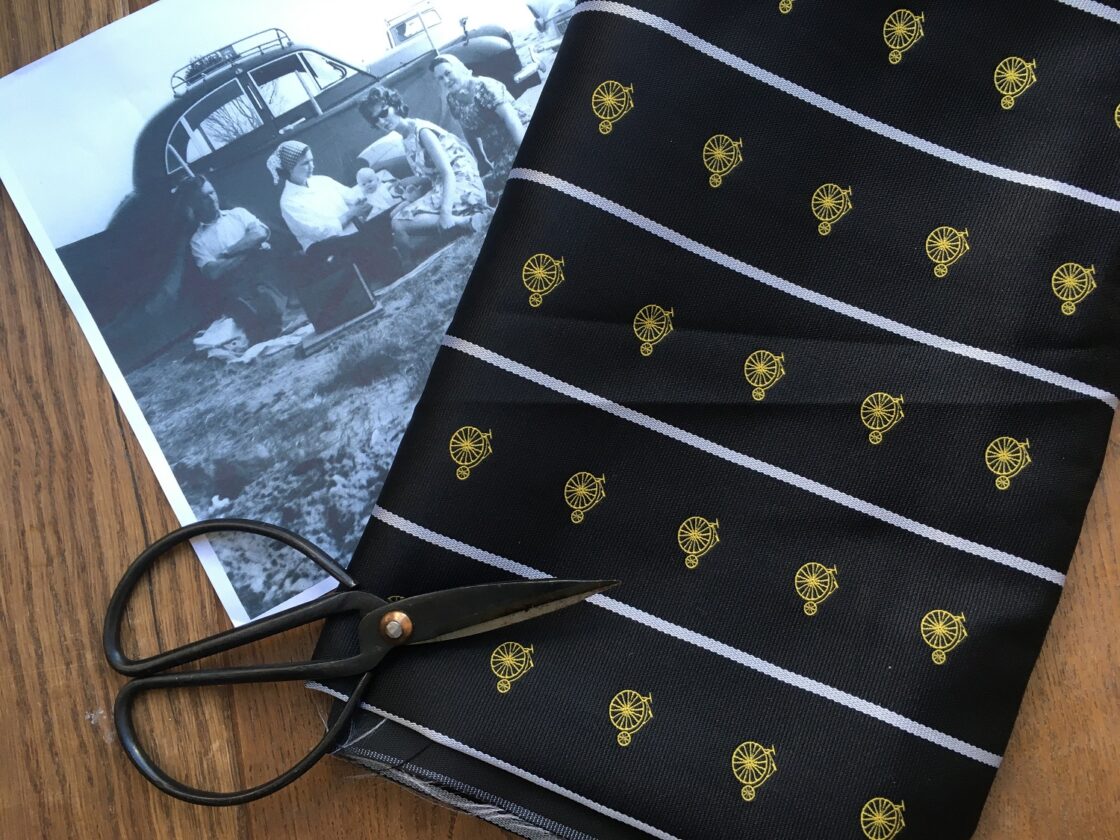
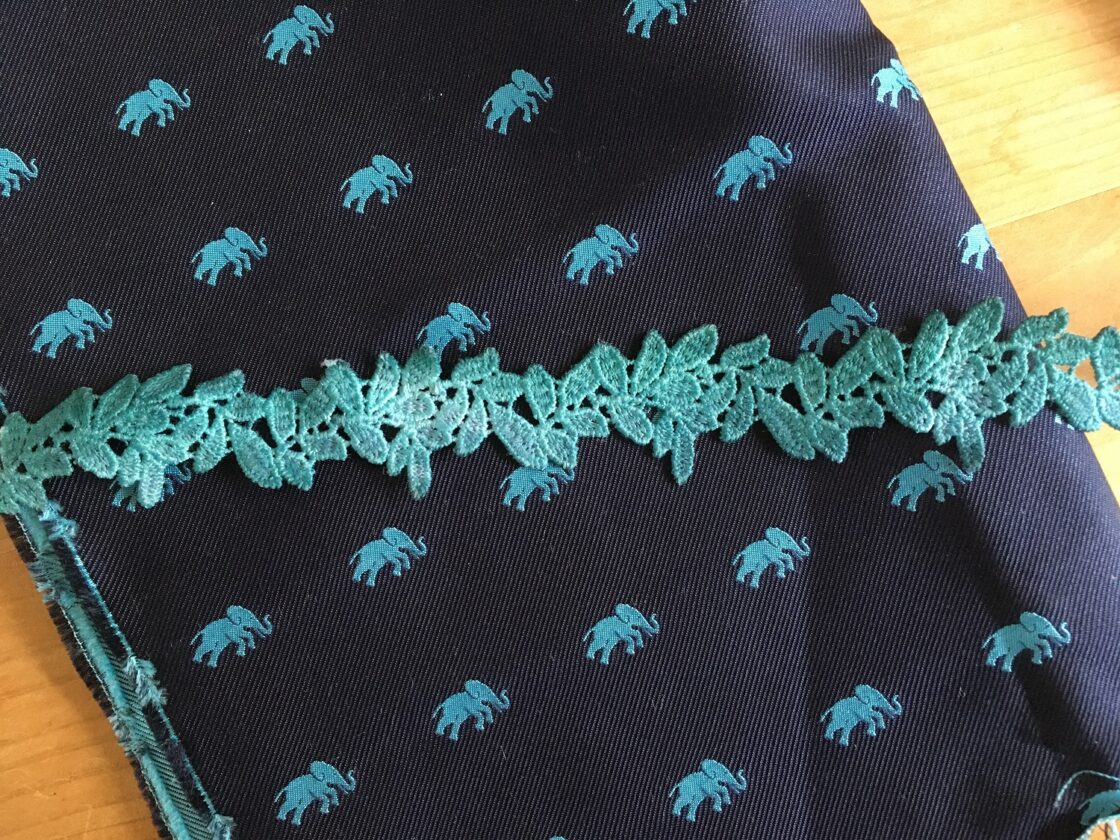
Lace has been hand painted to match this silk fabric with an elephant designSmall pieces of silk in toning colours are ideal for creating little purses
Silk weaving in the present day
Although much of the work of the silk companies is now based on innovative modern design, the companies’ archives are very important, with vast back-catalogues of patterns to inspire new designs. This willingness to look back while embracing the future is undoubtedly one of the reasons why Sudbury’s silk weavers have stayed at the top of their game for so long.
Precious offcuts of fabric, in stunning blends of more than 1,000 stock shades dyed in-house, used to disappear from the mill shops within hours of going on sale, snapped up by eager locals like myself. But it seems the rest of the world has now also cottoned on to Sudbury silk, which has built its reputation for luxurious quality through the work of highly-skilled people producing the very finest fabric, using a combination of traditional methods and the latest technology. The silk industry has helped keep Suffolk “on the map” for more than 300 years.
Weaving is a part of Britain’s past that I am really proud of” It’s no secret that I am obsessed with tweed and wool fabrics. Despite being unable to wear ‘itchy’ wool jumpers during my youth due to having sensitive skin, I’ve always admired the textures and colours of wool. Especially when it’s woven into…
The colours of the tweed really blended so well with the shades of the surrounding countryside” I’ve been very fortunate over the years I’ve been designing to live near some stunning locations for my bag sewing pattern cover photoshoots. This has included the beach on a bracing misty October morning, the wilds of Norfolk’s saltmarsh…
A hat is the crowning glory of any vintage inspired outfit” At one time, an ensemble wasn’t deemed complete without a hat. From the cloches of the 1920s to the pillboxes of the 60s, hats defined the mode of each decade throughout the 20th century. Although in terms of fashion they no longer have the…
If you time it right, in May, you will be greeted by bluebells in their thousands” I’ve recently been going through a ‘purple patch’. Not the kind that brings good fortune of the monetary variety but rather one that is of immeasurable value to the soul. Our garden, and the countryside and woodlands around south…
The first pattern to be officially ‘minified’ is our old favourite wartime-inspired Home Front Bag” I’ve got more than 60 bag patterns of differing shapes and sizes in the Charlie’s Aunt range, dating back over the past 15 years I’ve been designing them. Recently though, I’ve been asked if it’s possible to ‘shrink’ the pattern…
Instructions for a zipper pocket and an adjustable strap have been added to the pattern” Like all designers, I have my favourites, and the Charlie’s Aunt Gunton Messenger Bag is right up there for me. There is something about the simplicity of this elegant but practical style – evocative of the 1940s era – that…