

My obsession was cemented by the discovery of a shop, packed full of buttons in brown cardboard boxes”
One of the questions I get asked the most about Charlie’s Aunt bags is “where do you get the buttons you use in your designs?” The truth is that the carefully chosen vintage pieces I place on the flaps and pockets of many of my bags have taken a lifetime to collect.
Buttons have undoubtedly now become the stars on many of my bags, and they are the centre-pieces of many of my jewellery projects. I also love to incorporate vintage buckles and buttons into my hat designs. They have become synonymous with the brand.
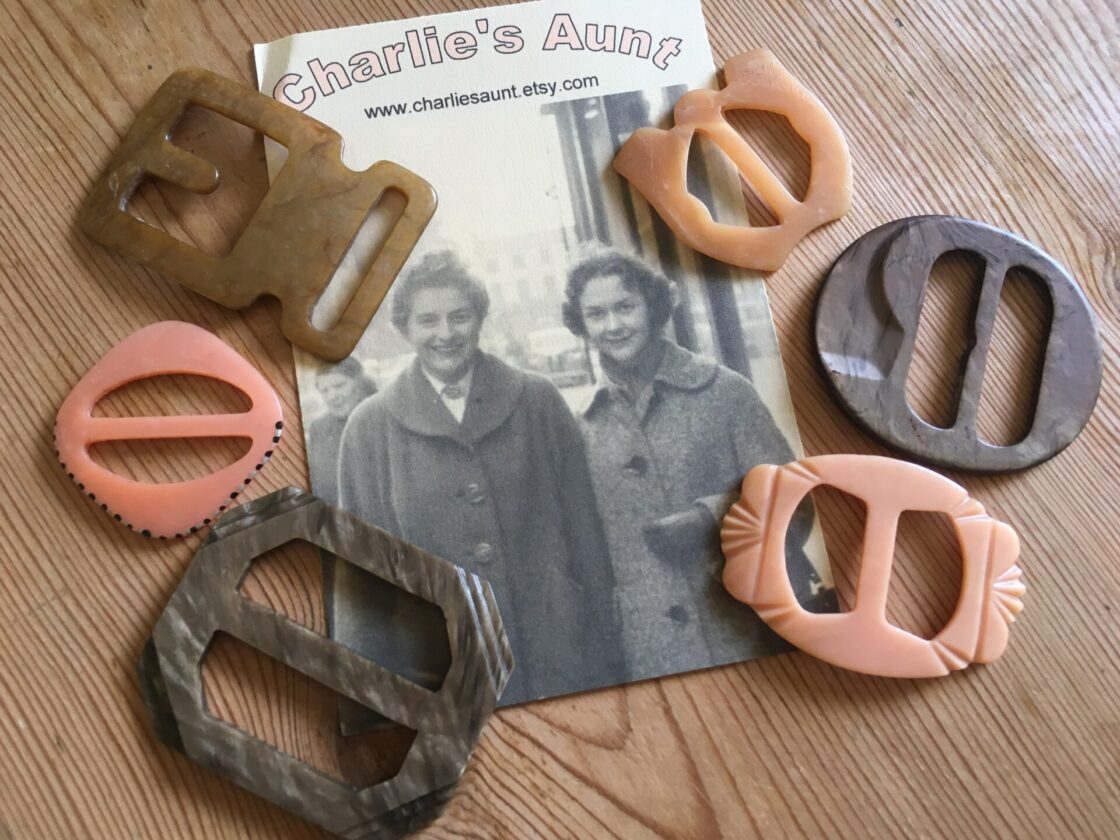
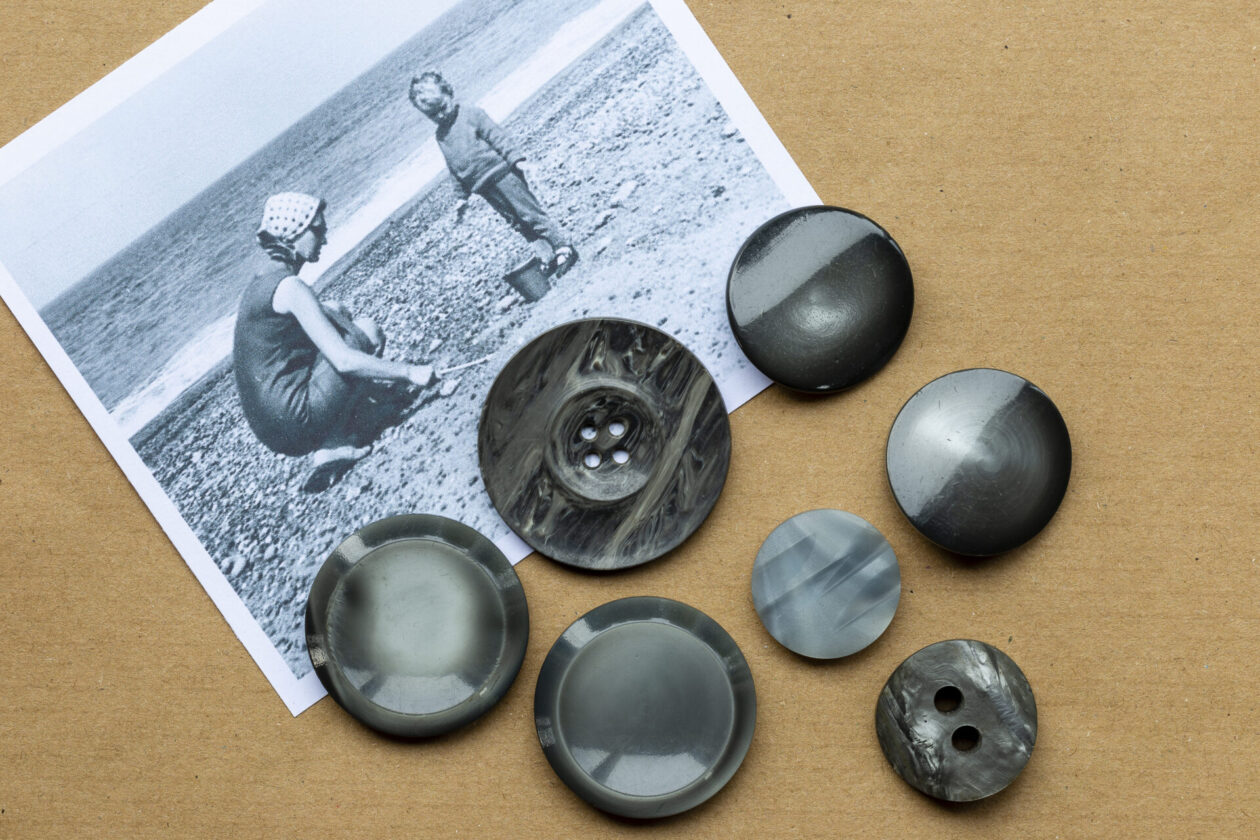
The simplicity of buttons
The idea of a button is such a simple one. The dictionary definition is ‘a knob or stud of metal or other material sewn by a shank or neck to articles of dress, usually for the purpose of fastening one part of the dress to another by passing through a button-hole’. But the huge range of different materials you can use to make a button, ranging from humble plastic and wood to metal and shell, makes them an extremely versatile adornment. Hence historically, buttons have become popular embellishments.
I developed a fascination for buttons after playing with a tin of them at my grandmother Violet’s house when I was very little. A box of buttons passed on to me by a lady who was a dressmaker during the 40s and 50s further fueled the fascination.
And then in the late 1980s, the obsession was cemented by the discovery of a shop, with shelves and wooden counters with drawers packed full of buttons in brown cardboard boxes. In fact, the shop, in a back-street of the Suffolk town of Ipswich, also gave me a yearning for my own haberdashery and fabric store kitted out in vintage style – a dream I still nurture.
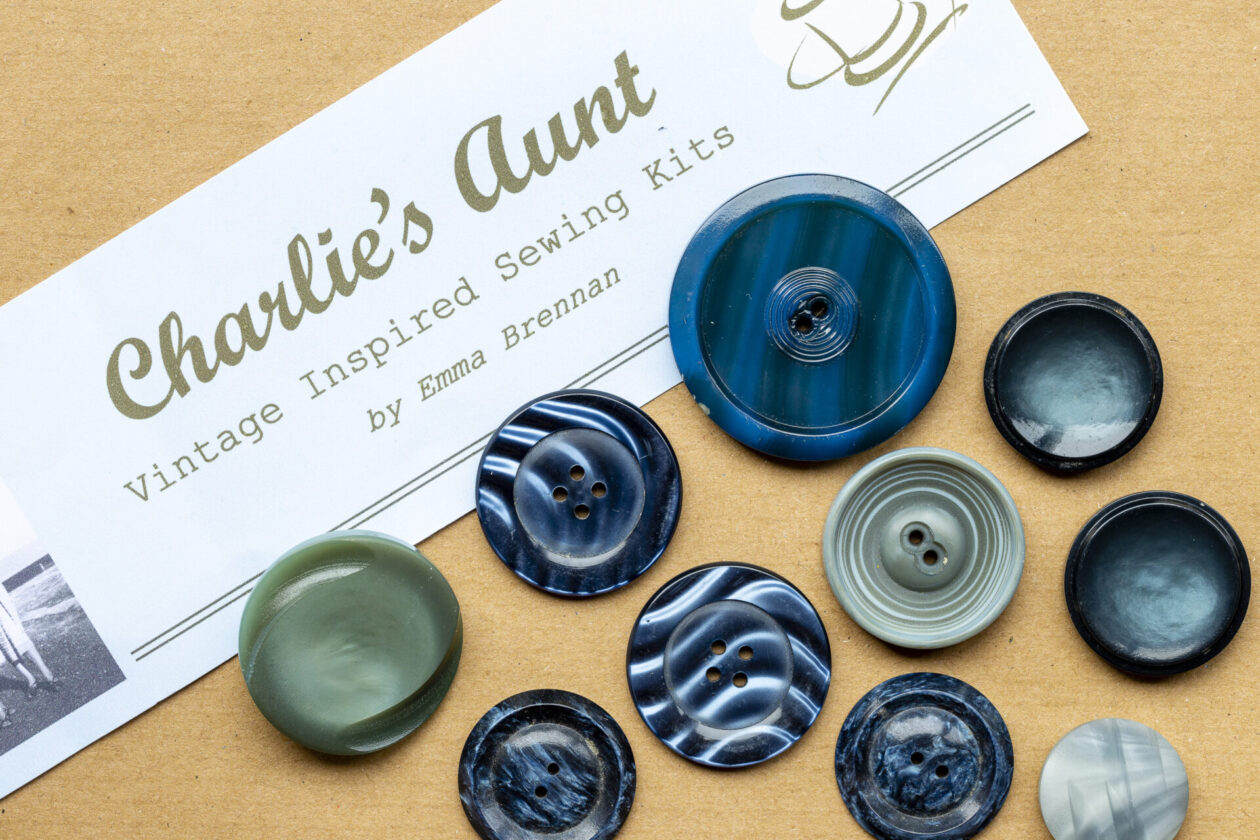
Where my buttons come from
The buttons I use come from a variety of sources. When I ran my clothing design business in the 90s, the buttons were an important part of the design of my vintage inspired jackets and coats. I still have many left over from that period, in wood, shell, Lucite and metal – all now classed as ‘vintage’ and all unused.
I’ve enjoyed trawling through charity shops and antique centres, where I’ve occasionally unearthed some amazing cut glass and tiny metal vintage buttons. Most of these are suitable for making jewellery, due to their jewel-like quality.
As mentioned before, I was fortunate to be able to buy a lot of the ex-stock from the aforementioned button store, via a remnant shop which is also long gone. This precious collection is now dwindling. I also sometimes get approached by people who have vintage button stashes to sell.
My favourite buttons
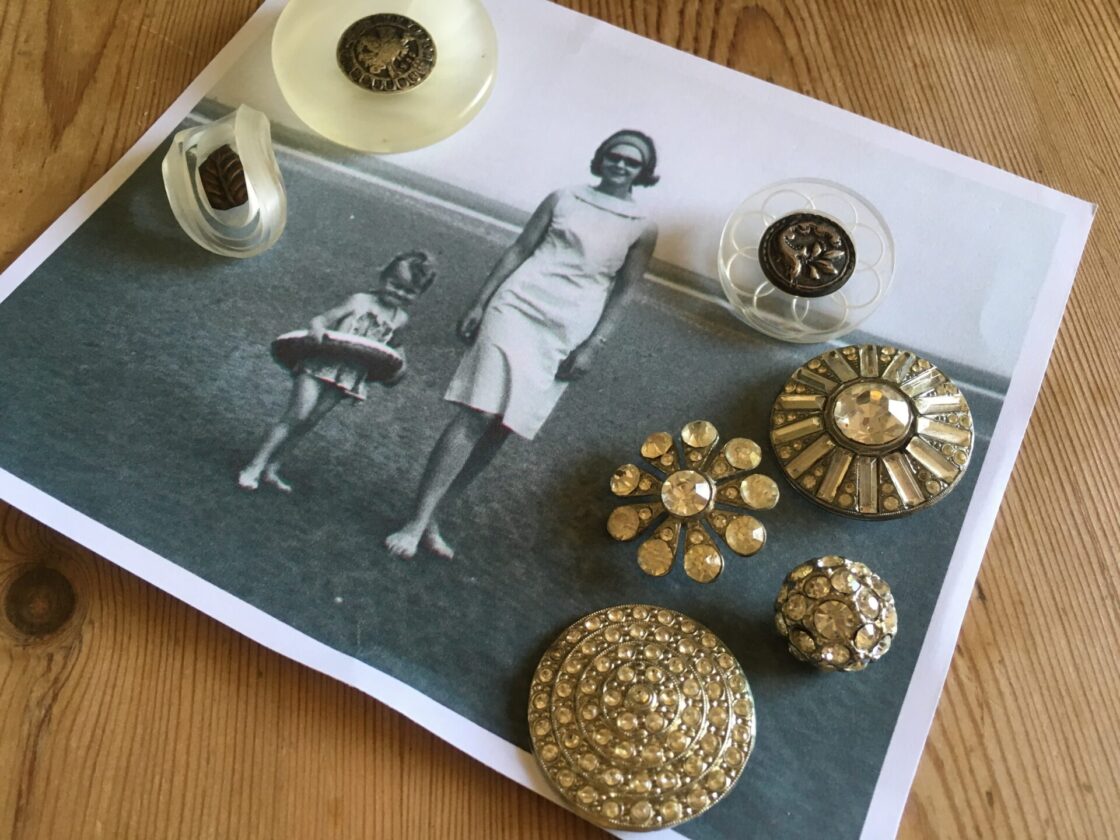
I love the simple shape and form of buttons which often belies the history behind many of them. Those that I buy from charity shops or purchase in ‘job lots’ hold a fascination for me and I find myself pondering their original purpose. Some of the diamanté buttons for example could have adorned someone’s special jacket or dress in the 1950s. Undoubtedly some of the larger early ‘plastic’ buttons were used on substantial and stylish tweedy coats. There must also be tales behind how some of them came to be ‘odd’ buttons – as a journalist at heart, I’m always looking for stories.
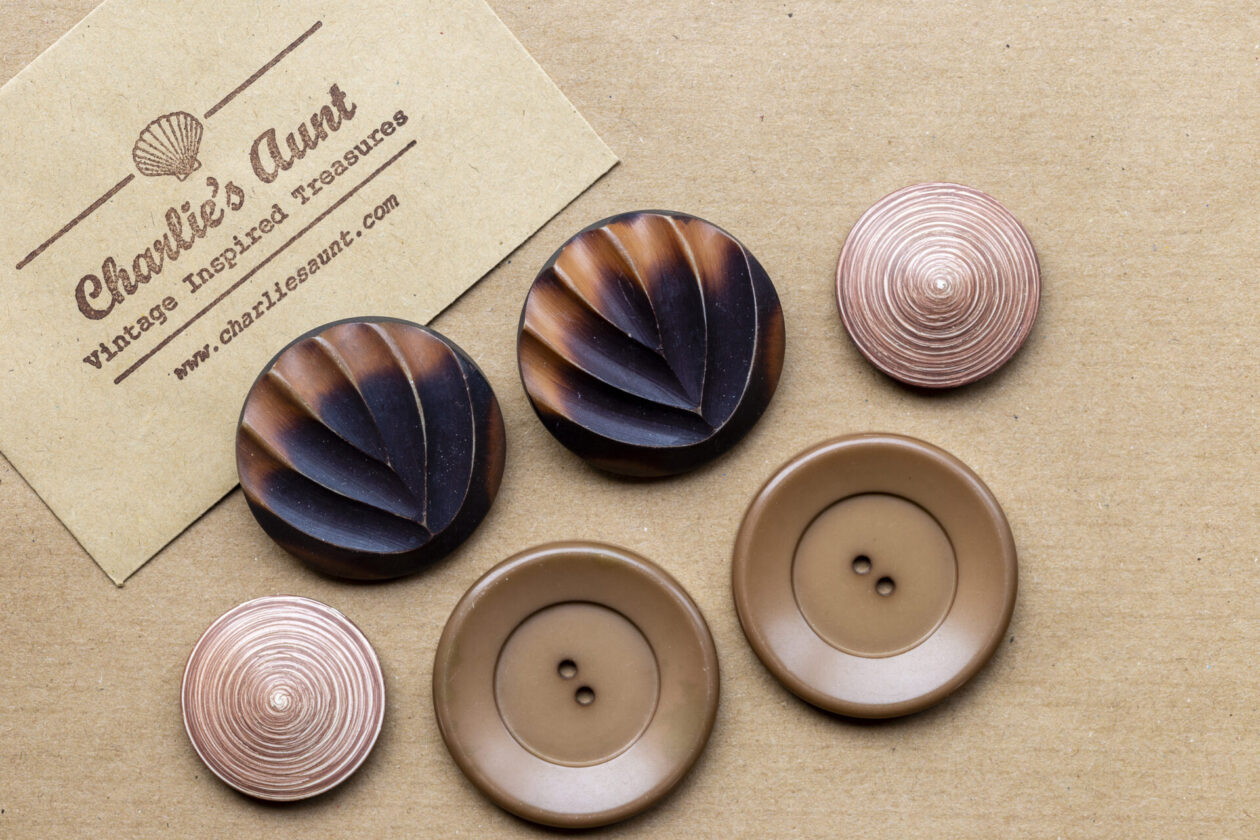
In terms of the buttons I like, I would describe my style as understated and classic, so personally I favour many of the early vintage plastic buttons from the 40s and 50s. These were largely made from Bakelite and Lucite. The difference between these and their modern plastic counterparts is that the subtle designs on buttons from these eras have usually been ‘carved’ into the button rather than being ‘moulded’ plastic.
There is a use for every button
It doesn’t matter how big or small a button is, I can find a use for it, whether it is part of a set or a one-off. I use single large buttons on the flaps of many of my bags, such as The Raynham Bag or The Blickling Bag. A flourish of smaller ‘mismatched’ buttons on the flaps of bags works well too, as in the Marsham Messenger Bag. Tiny buttons are used to trim dog coats on my applique Pooch Purses. A single odd button may be used to secure a flap on an interior pocket.

I currently sell vintage buttons as part of my fabrics packs and I am hoping to include some of my wonderful button stash in ‘slow stitching’ packs (coming very soon). These will be suitable for small accessory projects such as purses and corsages. Visit our Etsy shop for our current offerings.


