
I’ve always found it quite difficult to stitch simply for art’s sake rather than to produce something useful at the end of the process”
The art of ‘slow stitching’ is usually defined as mindful needlework which focuses awareness on the process of sewing rather than the end result. It has come into vogue in recent years as a way to cope with the stresses of our increasingly fast-paced lifestyles. It is a method of mindfulness or relaxation which harnesses creativity and focuses attention in a positive way.
To me, I guess slow stitching is about hand-sewing at a relaxed pace using simply a needle and thread. It’s about enjoying the process rather than whizzing through seams and top-stitching at pace, with my sewing machine.
Using stitch crafts as stress-busters
I have to admit, I’ve always been a bit of an impatient crafter. That’s why I’m a stitcher rather than a knitter or crocheter. My efforts at school to knit a rectangular dishcloth left me frustrated. At the end of it all, I was embarrassed to present my mother with a curled-up knitted triangle which she could in no way identify as a dishcloth. The unconventional shape was largely due to the ‘tension’ being so great that I could hardly get each stitch off the needle.
Despite my grandmother’s attempts to teach me to crochet (nearly everyone in our family had one of her colourful blankets made from reclaimed wool), I simply did not see the point of doing something that took SO long to result in anything remotely useable. A super-intelligent good friend of mine, who was a complete novice crocheter just a few weeks ago, has recently put me to shame by producing a stunning blanket, impeccably assembled from crocheted squares inspired by the colours of the Norfolk coast. Turns out he’s a natural – and he really enjoys it. Crochet is obviously his ‘slow stitching’.
Stitching art
Being a very practical sort, I’ve always found it quite difficult to stitch or create simply for art’s sake rather than to produce something useful at the end of the process. When I attended ‘creative stitch’ classes in search of a new distraction after my sister passed away, I struggled to make a randomly stitched wall hanging with the teacher remarking: “You find it impossible to let yourself go and sew for the enjoyment of it, don’t you?” I guess she was right to an extent, but I’m unconvinced that you can’t enjoy the process of slow stitching something useful.
I think when, like me, you’ve made overcoats, serviceable dungarees and hard-wearing bags, you want the stitching to hold, so creating massive loopy stitches on canvas with randomly sized threads is an alien concept I just cannot overcome. So, when I heard about slow stitching – as opposed to stitching a garment, cushion, soft toy or a million other useful things – I wondered if the two things had to be mutually exclusive.
How Charlie’s Aunt embraces slow stitching
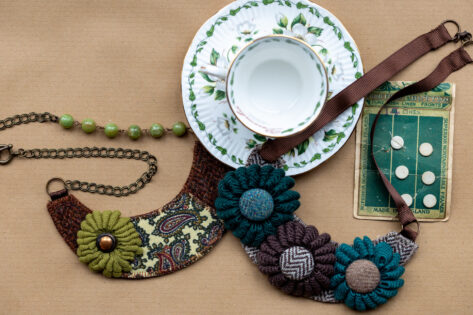
For me, slow stitching – taking my mind away from dozens of tasks I need to think about and do in a day – is about enjoying the process AND the end result. I love choosing the colours of the fabric scraps, ribbons or beads that I’m going to use and assembling them into a collage or design. It’s just that I turn those creative thoughts and processes into a fabric necklace, purse or bag, thus enjoying carrying out the stitching, and seeing the end result.
As most of my bags and hats are quite elegantly simple in their design, I like to spend time hand-stitching possible trims such as textile flowers and bows. I also enjoy hand-finishing projects with carefully chosen vintage buttons, or bead and lace trims. Anything you enjoy creating has the potential to be therapeutic in that it gets your mind to produce more ‘alpha waves’ which dominate when it is in a relaxed, meditative state.
Examples of my slow stitching
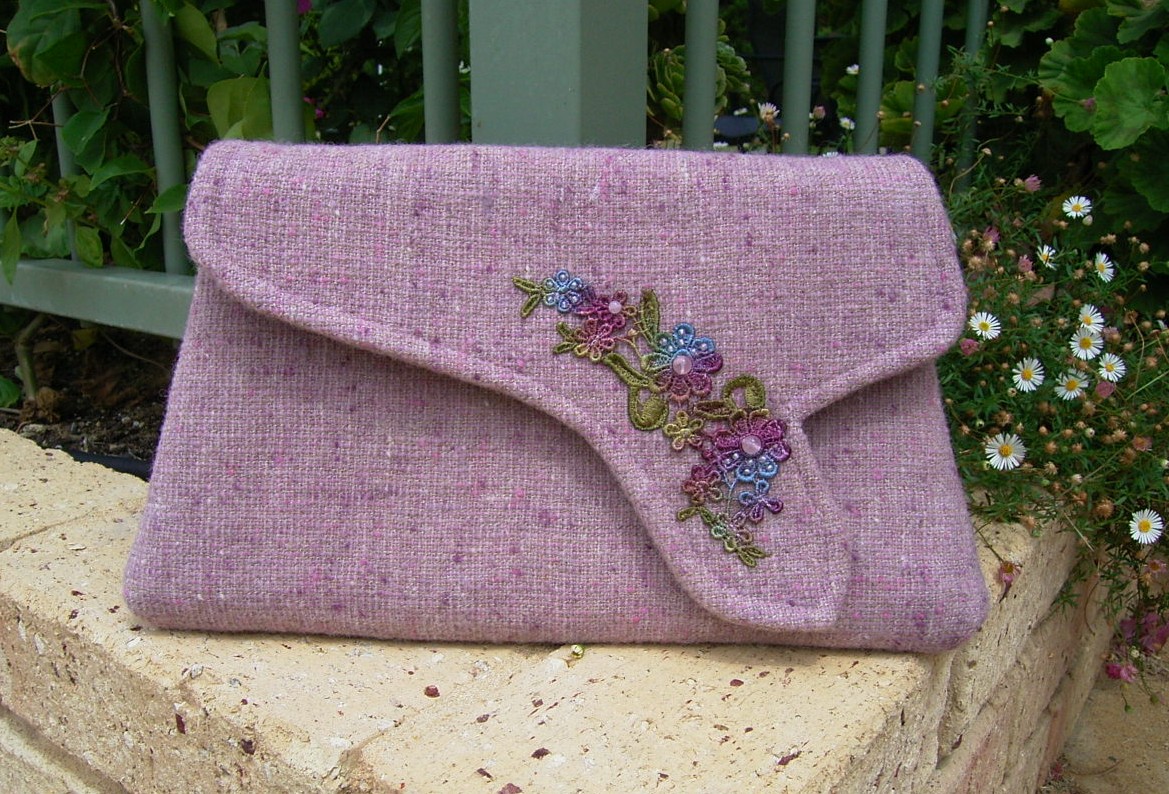
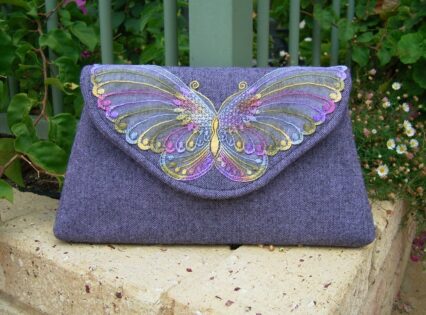
My slow stitching projects include making vintage inspired ribbon flowers – an art that dates back hundreds of years and can be done with very little equipment. I enjoy creating pretty blooms from humble felt fabric. I love applying hand-painted lace and beads to the flap of a tweed clutch bag – pairing serviceable fabric with pretty feminine trims.
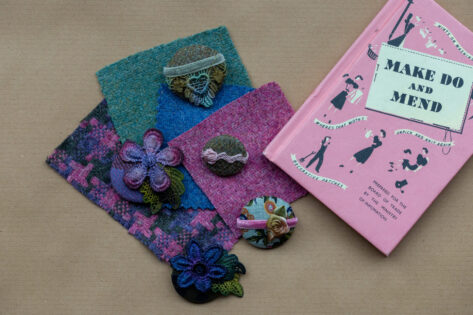
As I mentioned in a previous blog on make do and mend, I like to keep every little scrap of fabric and ribbon, and favour storing them in colour-coordinated collections in jars or see-through bags to inspire my slow stitching projects. I used to run classes in textile jewellery – a wonderful use for slow stitching – which I am hoping to restart this year.
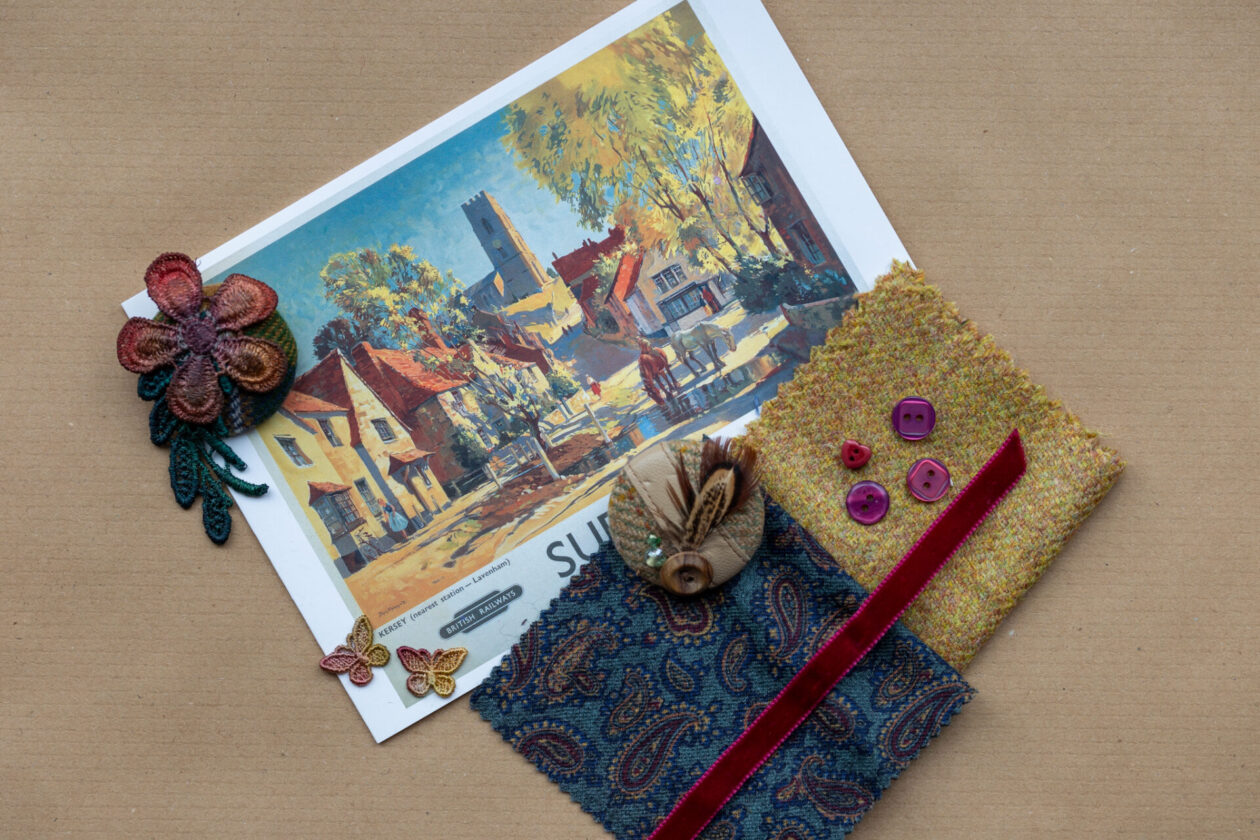
Charlie’s Aunt is also introducing some slow stitching packs to the website with accompanying e-tutorials with tips on what you can create using the packs. Most will have enough for you to fashion a small clutch bag or purse, trimmed with everything from vintage braid or ribbon to hand-painted lace, beads or ric rac flowers. Our Autumn Windfall Bib necklace PDF is another ideal project for slow stitching.
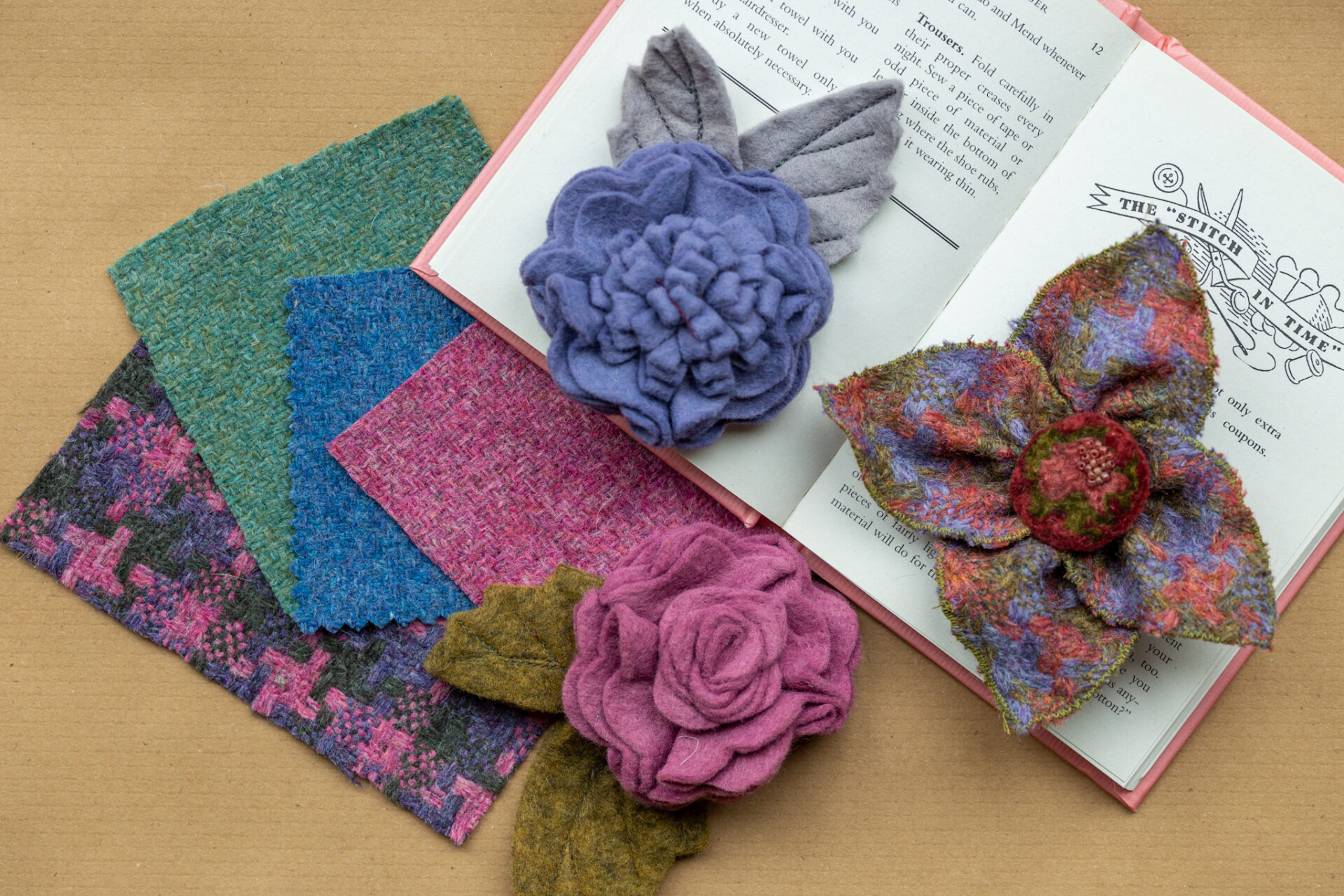
The pretty pink toned flower pictured here is made using a hand-felted ‘bead’ built up with layers of different coloured fleece, the creation of which was most therapeutic! I’ve then sliced it in half and stitched a small cluster of beads to one side to create a centrepiece for the flower’s vintage tweed petals. The flowers work well as millinery trims, focal points on a bag flap, or simply as a vintage style corsage brooch.
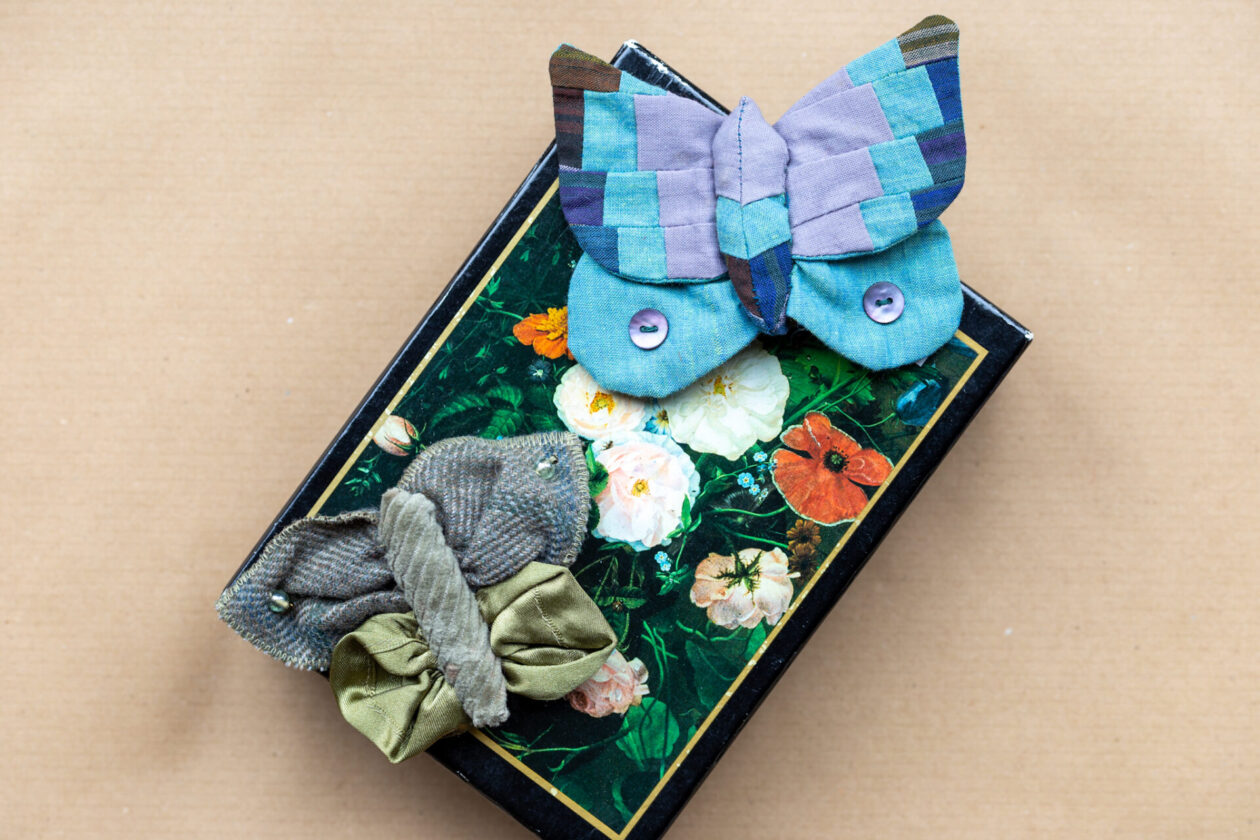
Meanwhile, the butterfly on the right was made using tiny scraps of cotton quilting fabric with ‘Seminole’ style patchwork for the wings and body. I used the butterfly (with a brooch bar pin backing) to add charm to a summer hat. The other butterfly was hand-stitched from a piece of corduroy bias binding, a scrap of ribbon and an oddment of tweed. Again, a lovely trim for a clutch bag, hat, or even a lapel.
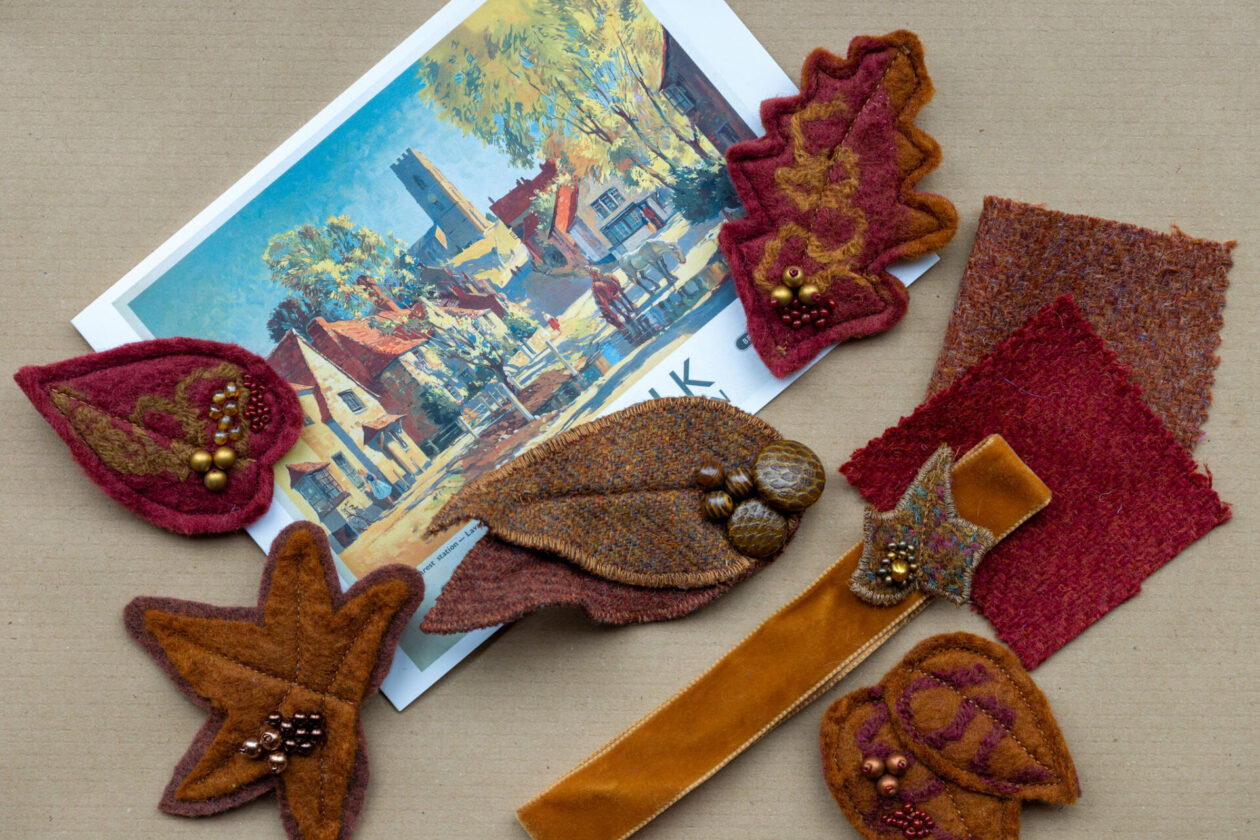
The collection of ‘leaves’ is made from hand-made felt with embedded threads and stitched-on beads – all ideal as brooches or trims. The pink clutch bag has painted lace handstitched to the flap, dotted with small pale pink beads.
I think what I’m trying to say is that slow stitching neither has to take forever, nor be sewing with no end goal, or even an artistic labour of love. If you enjoy the act of sewing, then why not harness that to make something lovely that’s also functional at the end of the process.
For projects to slow stich, visit the Charlie’s Aunt Etsy shop.


